 How-to
Can Somatic Exercises Calm You at Work?
Last Updated: November 19, 2026
Quick Summary
Somatic exercises for emotional regulation at work are body-based practices that help you notice and shift physical stress responses in real time. They fit the workday because they take minutes, need no equipment, and can be done at a desk.
- Hand on heart and hand on belly takes two minutes and builds body awareness fast.
- Orienting takes 60 seconds: turn your head and silently name three objects.
- Shoulder release takes 90 seconds: lift shoulders, hold five seconds, drop, repeat three times.
- Try a 4-6 breath count for five rounds, keeping the exhale longer than the inhale.
- Stop any practice if you feel dizzy, panicked, numb, or flooded with memories.
Table of Contents
- Why Somatic Exercises Fit the Workday
- Somatic Exercises for Anxiety You Can Do at Your Desk
- Somatic Grounding Exercises for Stressful Moments
- Somatic Exercises for Nervous System Regulation
- Matching the Exercise to Your Work Situation
- Somatic Exercises for Anxiety PDF: What to Look For
- When to Stop: Safety Guidance for Body-Based Practice
- Building a Somatic Practice Beyond the Office
- Frequently Asked Questions
Why Somatic Exercises Fit the Workday
Somatic exercises for emotional regulation at work are body-based practices that help you notice and shift physical stress responses in real time. They fit the workday because they take minutes, need no equipment, and can be done at a desk.
Your body reacts to a tense email before your mind catches up. A tight jaw, shallow breath, or clenched hands are signals. Somatic practices work directly with those signals.
What the Research Says (and What It Doesn't)
The evidence is promising but early. A 2021 review of Somatic Experiencing found preliminary evidence for positive effects on chronic stress and post-traumatic stress symptoms. That is not proof it works for every office moment.
A 2025 study described 150 trauma survivors who received 75 minutes of somatic-based skills training in affect regulation. The research did not report a workplace-specific outcome, so treat office benefits as reasonable, not guaranteed.
Somatic Exercises for Anxiety You Can Do at Your Desk
Desk-friendly practice starts with three short options. Each takes under five minutes, and each targets anxiety by calming the body first. Try one before a meeting or after a hard call.

Three Quick Practices Under Five Minutes
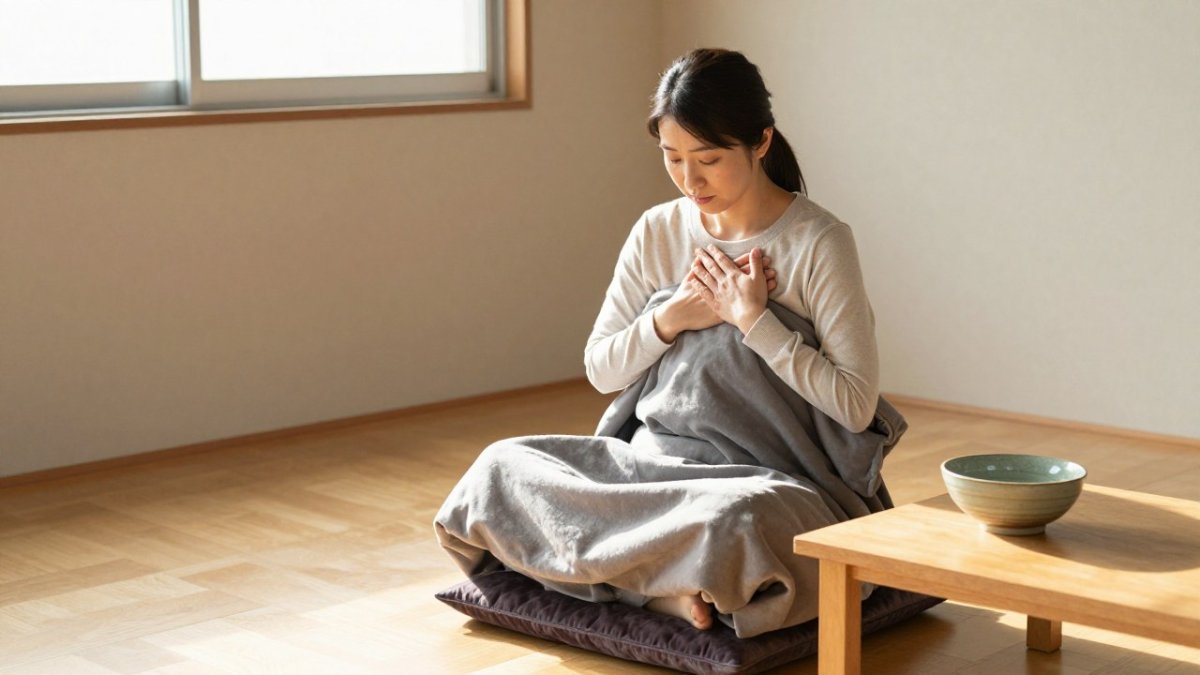
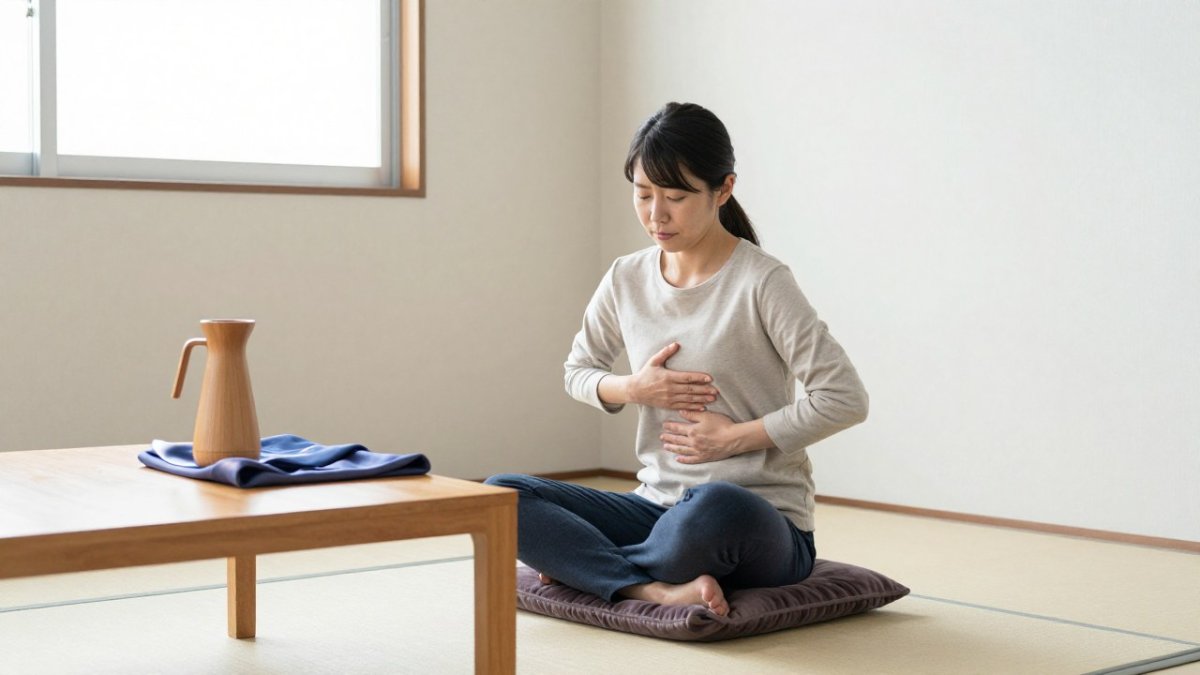
- Hand on heart, hand on belly (2 minutes). Sit tall. Breathe slowly and feel both hands rise and fall. This builds body awareness fast.
- Orienting (60 seconds). Slowly turn your head and let your eyes rest on three objects. Name each one silently. This signals safety to your nervous system.
- Shoulder release (90 seconds). Lift your shoulders to your ears, hold for five seconds, then drop. Repeat three times to release tension.
For more breath-focused options, see our guide to breathing exercises for nervous system health.
Somatic Grounding Exercises for Stressful Moments
Grounding pulls you out of a stress spiral and back into the present. Use these when your heart races before a presentation or after a conflict.
- Feel your feet. Press both feet into the floor and notice the contact for 30 seconds.
- Cool your hands. Hold something cool, like a water bottle, and track the sensation.
- Five senses scan. Name one thing you see, hear, feel, smell, and taste.
These sensory grounding exercises work because they redirect attention to real, physical input. If panic is a recurring issue, our article on somatic grounding techniques and panic attacks goes deeper.
Somatic Exercises for Nervous System Regulation
Nervous system regulation means helping your body shift out of fight-or-flight and into a calmer state. Slow breathing and gentle movement are the most portable tools for this, but the details matter more than the label. Many people find that a longer exhale and a relaxed jaw feel calming, though responses vary.
Diaphragmatic breathing is the foundation. Breathe so your belly, not your chest, expands. A slower exhale tells your body the threat has passed. Try a 4-6 count: inhale through the nose for four, exhale through the mouth for six, for five rounds. If that feels uncomfortable, shorten both counts and keep the exhale longer than the inhale. Humming and gentle vocalization also help by lengthening the exhale, and they are quiet enough for a desk or a parked car.
A second lever is temperature and contact. Cool hands on a water bottle, a cool pack on the wrists, or pressing both feet into the floor give the nervous system a clear, physical signal to orient to the present. These are the same sensory grounding moves many people already use, but framed as regulation rather than distraction.
A third lever is pendulation, which means gently shifting attention between a comfortable sensation and a mildly uncomfortable one. You might notice warmth in your hands, then a tight spot in your shoulders, then return to the warmth. The goal is not to fix the discomfort. It is to teach your nervous system it can move between states. Keep the uncomfortable sensation mild, and always return to the comfortable one.
Beginners often benefit from a structured starting point. Our guide to nervous system regulation exercises for beginners walks through the basics. If anxiety is your main concern, vagus nerve stimulation techniques offer another angle.
Watch out: breath-focused practice is not right for everyone. If slow breathing makes you dizzy, panicky, or more aware of distressing body sensations, switch to orienting, feet on the floor, or a cool object in your hands, and keep the practice brief.
Matching the Exercise to Your Work Situation
The right practice depends on where you are and what you feel. Use this quick guide.
| Situation | Try This | Time |
|---|---|---|
| Anxious before a meeting | Hand on heart, slow breathing | 2 min |
| Tense after a hard email | Shoulder release | 90 sec |
| Overwhelmed at your desk | Orienting to three objects | 60 sec |
| Restless, low energy | Mindful walking to the kitchen | 3 min |
| Can't focus | Five senses scan | 2 min |
Match the tool to the moment. A calming practice will not help if you need energy, and a movement break will not settle a racing heart.
Somatic Exercises for Anxiety PDF: What to Look For
A good somatic exercises for anxiety PDF should be usable in five minutes, not filed away. Many handouts stop at general stress advice, so use this checklist to judge whether a handout will work at a desk, between meetings, or in a shared office.
- Each exercise lists a duration, ideally 30 seconds, 2 minutes, or 5 minutes
- Steps are short and numbered, with no more than five steps per exercise
- There is guidance on when to stop and what to do instead
- Exercises are grouped by purpose (grounding, calming, energy, transition)
- At least one option is seated, low-noise, and does not require closing your eyes
- There are alternatives for people who find breath or body-focused practices uncomfortable
- No promises of a cure
Skip anything that claims to erase anxiety or trauma. Body-based practices are a support, not a replacement for care.
A workplace-ready PDF should also answer practical questions. Does it say whether an exercise can be done in a meeting without drawing attention? Does it note that closing your eyes may be unsafe while walking or driving? Does it offer a remote-work version and an in-office version? These details separate a useful handout from a generic list.
If you are building your own, keep the format simple: one page per time block, a short decision guide for common work moments (before a presentation, after a conflict, during overwhelm, when you cannot refocus), and a safety note at the top. That structure makes the PDF easy to skim in the thirty seconds you actually have.
When to Stop: Safety Guidance for Body-Based Practice
Stop any practice if you feel dizzy, panicked, numb, or flooded with memories. These are signs your nervous system is overwhelmed, not signs of failure. Open your eyes, feel your feet, and return to the room.
Watch out: pushing through intense discomfort can make trauma responses worse. Keep sensations mild and stay in control.
Somatic exercises are described as a foundational layer, not the whole structure of trauma recovery. If you have a trauma history, work with a qualified professional. This article is general information, not medical advice.
Building a Somatic Practice Beyond the Office
A steady practice grows from small, repeated moments. Pick one exercise, do it daily for a week, and notice what changes. Track whether your shoulders drop faster or your breath slows sooner.
When you are ready for guided support, know what to look for. Our article on finding a qualified somatic coach safely covers training, credentials, and red flags.
At The BodyVox, our trauma-informed, client-led approach helps you build body awareness that lasts. We offer private 1:1 immersions for individuals and couples and global retreats, including Sensuality Retreats for Gay, Bisexual, Trans and Queer Men, for those who want to go deeper.
Your body holds the tension your workday creates, and it can also release it. If desk exercises feel like a starting point and you want to go further, The BodyVox can help. Our somatic coaching uses a trauma-informed, consent-focused method, tailored to your nervous system. We offer private 1:1 immersions and global retreats designed to reconnect you with your body. Get started with The BodyVox and build body-based skills that carry into every part of your life.
Frequently Asked Questions
How long should a somatic exercise take to help me feel calmer?
Most desk-friendly somatic exercises work in two to five minutes. A 2025 study of 150 trauma survivors used 75 minutes of somatic-based skills training in affect regulation, but that was a group training format, not a single practice. For everyday use, try one exercise for three minutes and check in with yourself afterward. If nothing shifts, a different practice may suit your nervous system better.
What should I do if a grounding exercise makes me feel more activated?
Stop the exercise and open your eyes. Look around the room and name five things you can see, then feel your feet on the floor. A 2021 review of Somatic Experiencing describes the approach as focusing on chronic stress and post-traumatic stress symptoms, and its authors characterize the evidence as preliminary. Body-based work can bring up more than expected, especially for trauma survivors. If a practice consistently leaves you more activated, work with a trauma-informed professional rather than pushing through.
Can somatic exercises for anxiety at work replace therapy?
No. Somatic exercises are a self-care tool, not a treatment. One source describes somatic exercises as a foundational layer rather than the entire structure of trauma recovery. The 2021 review found only preliminary evidence for Somatic Experiencing's positive effects, so claims that body-based practice is proven or established go too far. Use these techniques to steady yourself between meetings. For ongoing anxiety or trauma symptoms, talk to a licensed mental health professional about what fits your situation.
Where can I find a reliable somatic exercises for anxiety PDF?
Look for a PDF that lists each exercise with a duration, clear step-by-step instructions, and guidance on when to stop. Avoid downloads that promise to cure anxiety or trauma, since the research does not support that. Check whether the source names its author's credentials and cites published work such as the 2025 affect regulation study or the 2021 Somatic Experiencing review. A good PDF is a reference sheet, not a replacement for professional support.