how-to
Vagus Nerve Stimulation Techniques for Anxiety
Table of Contents
- What Vagus Nerve Stimulation Does for Anxiety
- How Breathing Exercises Activate Your Vagus Nerve
- Vagus Nerve Stimulation at Home: Practical Techniques
- Using Humming for Anxiety Relief
- Grounding Techniques for Anxiety and Nervous System Regulation
- Building Consistent Practice for Long-Term Nervous System Resilience
- When to Seek Professional Support
- Conclusion
- Frequently Asked Questions
Last Updated: October 10, 2026
What Vagus Nerve Stimulation Does for Anxiety
Vagus nerve stimulation techniques for anxiety activate your parasympathetic nervous system, your body's natural calming response.
The vagus nerve runs from your brain through your neck, chest, and digestive system. When activated, it slows your heart rate, deepens your breathing, and quiets your mind.
Vagus nerve stimulation techniques for anxiety create lasting changes with regular practice. A single breath provides temporary relief; consistent practice builds nervous system resilience over weeks and months.
How Breathing Exercises Activate Your Vagus Nerve
Breathing exercises activate your vagus nerve fastest because breath is the one part of your nervous system you can control directly.
A longer exhale than inhale triggers the parasympathetic response. Your vagus nerve detects breath patterns, and a longer exhale signals safety to your nervous system.
Box Breathing: A Step-by-Step Method
Box breathing is a simple vagus nerve stimulation technique for anxiety that takes four minutes and works anywhere.
How to do box breathing:
- Sit comfortably with your back supported
- Breathe in slowly through your nose for a count of four
- Hold your breath for a count of four
- Exhale slowly through your mouth for a count of four
- Hold empty for a count of four
- Repeat for four to five rounds
Practice daily for two weeks to notice baseline anxiety dropping.
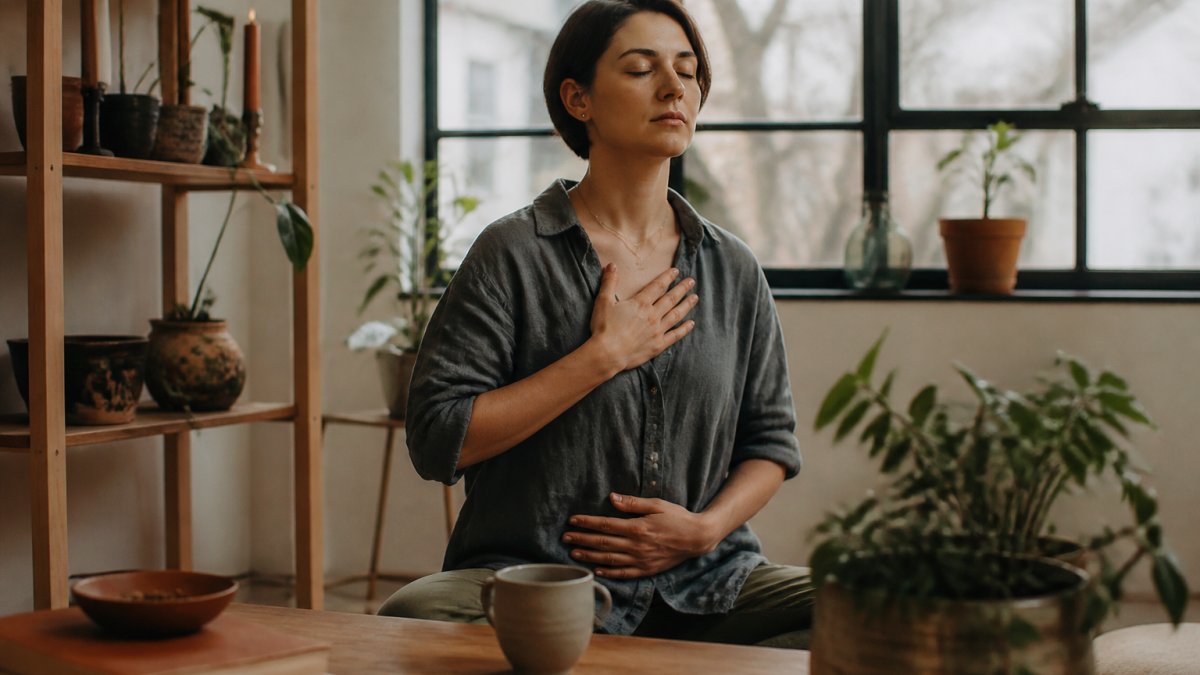
Equal counts matter more than the exact number; adjust to five or six if four feels rushed.
Extended Exhale Breathing
Extended exhale breathing creates stronger vagal activation and works best during high anxiety.
How to practice extended exhale breathing:
- Sit or lie down in a comfortable position
- Breathe in through your nose for a count of four
- Exhale through your mouth for a count of six to eight
- Pause briefly before the next inhale
- Repeat for five to ten breaths
The exhale should be longer than the inhale; even a small difference helps shift your nervous system.
Vagus Nerve Stimulation at Home: Practical Techniques
Beyond breathing, several body-based techniques activate your vagus nerve without equipment or special training. These work best as a daily practice, not just during anxiety spikes.
Cold Water Immersion and Face Splashing
Cold water triggers an immediate parasympathetic response through your body's dive reflex, slowing your heart rate when it touches your face.
How to use cold water safely:
Start with your face. Splash cold water on your forehead and cheeks for ten to thirty seconds. Do not submerge your head if you have heart conditions or high blood pressure. Check with your doctor first.
Cold water activates your parasympathetic nervous system within seconds, especially helpful when anxiety feels urgent.
Gentle Neck and Throat Massage
Your vagus nerve runs through your neck; gentle massage activates it without cold shock.
How to massage your vagus nerve:
- Locate the soft area on the side of your neck below your ear
- Use two or three fingers to apply gentle, slow pressure
- Massage downward along the side of your neck toward your collarbone
- Use light pressure only, never press hard on your neck
- Spend two to three minutes on each side
Slow, intentional touch activates the vagus nerve; rough pressure creates tension instead of relaxation.
Using Humming for Anxiety Relief
Humming activates your vagus nerve through vibration in your vocal cords.
How to hum for anxiety relief:
- Sit comfortably and close your mouth
- Hum at any pitch that feels natural to you
- Feel the vibration in your chest and throat
- Hum for one to three minutes
- Repeat as needed throughout the day
Pitch doesn't matter; what matters is the vibration and extended exhale that humming naturally creates.
This technique is subtle enough to use at work or in public.
Grounding Techniques for Anxiety and Nervous System Regulation
Grounding brings your attention to the present moment through your senses, stopping the anxiety spiral.
Anxiety lives in future stories. Grounding pulls you back to the present moment, where your nervous system cannot sustain anxiety.
The 5-4-3-2-1 Sensory Grounding Method
The 5-4-3-2-1 technique uses your senses to anchor you in the present. It takes three to five minutes.
How to practice 5-4-3-2-1 grounding:
- Name five things you can see right now
- Name four things you can physically feel
- Name three things you can hear
- Name two things you can smell
- Name one thing you can taste
Specific details anchor attention more powerfully than vague observations.
Bilateral Stimulation and Body Awareness
Bilateral stimulation activates both sides of your body simultaneously, calming your nervous system and processing stored stress.
How to practice bilateral stimulation:
- Sit comfortably with both feet on the floor
- Tap your knees alternately, left-right-left-right, for one to two minutes
- Or cross your arms over your chest and tap your shoulders alternately
- Keep a steady, rhythmic pace
- Notice the sensation without judging it
Alternating stimulation engages both brain hemispheres, interrupting anxiety loops.
Building Consistent Practice for Long-Term Nervous System Resilience
Vagus nerve stimulation techniques for anxiety work on different timescales; understanding these helps set realistic expectations.
Timeline by Outcome: What to Expect When
Immediate calming (minutes to hours)
Breathing exercises, cold water exposure, and humming produce parasympathetic activation within seconds to minutes.
Short-term symptom changes (one to three weeks)
With daily practice, most people notice baseline anxiety shifting within 7-14 days: anxiety escalates more slowly, stress recovery accelerates, and sleep improves.
Longer-term pattern shifts (four weeks to three months)
Consistent daily practice over 4-12 weeks creates durable changes: resting heart rate decreases, anxiety episodes become less frequent and intense, and you feel more agency over your nervous system.
Factors That Affect Your Timeline
Your nervous system's response speed depends on several variables:
Trauma history: Nervous systems conditioned to high alert by past trauma rewire more slowly and may resist calming. A trauma-informed practitioner can accelerate progress.
Sleep and recovery: Chronic sleep deprivation prevents efficient nervous system rewiring. Prioritize sleep if averaging fewer than 6 hours nightly.
Ongoing stress load: Techniques are outmatched by high external stress. Reducing stressor load amplifies practice effects.
Consistency: Daily practice, even five minutes, beats sporadic longer sessions.
A Structured Week-by-Week Plan
Instead of a generic routine, here's a progressive approach that builds over four weeks:
Week 1: Five minutes box breathing (morning). Rate baseline anxiety 1-10.
Week 2: Add one minute humming (midday). Notice how quickly you calm when anxiety rises.
Week 3: Add two minutes neck massage or bilateral stimulation (evening). Track sleep and stress recovery.
Week 4: Compare anxiety rating to Week 1. Identify which techniques feel most effective and plan your long-term routine.
Measuring Progress Without Overinterpreting Biometrics
Heart rate variability (HRV) and resting heart rate can indicate progress but have significant limitations.
What HRV and resting heart rate can tell you:
Sustained decreases in resting heart rate and improved HRV indicate greater parasympathetic activity and nervous system flexibility.
What a single reading cannot tell you:
Single readings are unreliable; heart rate varies with sleep, caffeine, time of day, stress, activity, and hydration.
Better progress indicators:
Track observable patterns: How many days felt calmer? How quickly do you recover from stress? Are anxiety episodes shorter?
What to Do When Techniques Increase Distress
For most people, vagus nerve stimulation techniques are calming. For some, particularly those with trauma histories, they can feel activating or trigger panic.
If a technique increases distress: stop immediately, return to grounding, try gentler approaches (humming or neck massage), or seek professional support if multiple techniques trigger distress.
When to Seek Professional Support
Vagus nerve stimulation techniques for anxiety are evidence-supported tools for nervous system regulation, but they are not a substitute for professional care in certain situations.
Signs You Should Consult a Healthcare Provider
Persistent or worsening anxiety despite consistent practice
Anxiety that interferes with daily functioning
If anxiety prevents work, relationships, or self-care, seek professional support.
History of trauma or adverse childhood experiences
If you have experienced trauma, standard vagus nerve stimulation techniques may feel destabilizing. Trauma-informed professional guidance is recommended.
Breathing exercises or body-focused techniques trigger panic, flashbacks, or intense distress
Seek professional support before continuing self-directed somatic work.
Anxiety accompanied by physical symptoms you haven't had evaluated
See a physician to rule out medical causes of chest tightness, heart palpitations, dizziness, or shortness of breath.
What Type of Professional to Seek
Different professionals bring different expertise. Depending on your needs, consider:
Licensed therapist or counselor (LCSW, LPC, psychologist, psychiatrist)
Therapists help you understand anxiety roots, process trauma, and develop coping strategies. CBT and trauma-focused CBT have strong evidence for anxiety and trauma.
Somatic practitioner or somatic therapist
Somatic practitioners specialize in body-based nervous system work and can guide vagus nerve stimulation in a trauma-informed way. Look for training in Somatic Experiencing or Sensorimotor Psychotherapy, and verify formal credentials.
Primary care physician
Your doctor can rule out medical causes and discuss medication or mental health referrals.
The Difference Between Self-Directed Practice and Clinical Treatment
Vagus nerve stimulation techniques are valuable for nervous system regulation but are not clinical treatment for anxiety disorders.
Self-directed vagus nerve stimulation is appropriate for:
General stress management, building resilience, complementary support with therapy or medication, and mild to moderate anxiety without trauma history.
Clinical treatment is necessary for:
Anxiety disorders, trauma-related conditions, anxiety with depression, anxiety impairing functioning, or anxiety unresponsive to self-directed techniques.
How to Start the Conversation With a Professional
Describe your anxiety symptoms, mention what you've tried, share relevant history, ask about their approach, and discuss goals. Finding the right fit may take time.
Conclusion
Vagus nerve stimulation techniques for anxiety offer a direct path to nervous system regulation. Breathing exercises, cold water exposure, humming, and grounding all activate your parasympathetic nervous system and shift you out of survival mode. The key is consistent daily practice.
For deeper nervous system healing, especially if anxiety is rooted in trauma or chronic stress, professional support accelerates results. Somatic practitioners trained in body-based nervous system work can guide you through these techniques in a trauma-informed way, helping you build lasting resilience and reconnect with your body's wisdom.
Frequently Asked Questions
What are simple vagus nerve stimulation techniques I can try right now?
Start with extended exhale breathing: inhale for a count of 4, exhale for a count of 8. Practice for 2-3 minutes daily. You can also try humming, gargling, or gentle neck massage. These vagus nerve stimulation techniques activate your parasympathetic nervous system and calm your stress response without any equipment or special training.
How long does it take to feel the effects of vagus nerve exercises?
Most people notice a shift in their nervous system within the first few minutes of practice, your heart rate may slow and your breathing may deepen. However, building lasting stress resilience requires consistent practice over weeks and months. Daily practice, even for 5-10 minutes, creates measurable changes in how your body responds to anxiety over time.
Can vagus nerve stimulation techniques replace professional anxiety treatment?
Vagus nerve techniques are powerful tools for managing everyday anxiety and building nervous system flexibility, but they work best as part of a complete approach. If you're experiencing persistent anxiety, trauma responses, or difficulty with intimacy and embodiment, working with a trauma-informed somatic therapist or coach can help you integrate these practices safely within a supportive relationship.
What should I do if a breathing or grounding exercise makes my anxiety worse?
Some people experience increased distress when focusing intensely on their breath or body, especially if they have a history of trauma. If this happens, stop the exercise and try a gentler approach like humming, cold water on your face, or grounding techniques that focus on external sensations rather than internal breath awareness. Working with a qualified somatic practitioner can help you find techniques that work with your nervous system rather than against it.