 blog
blog
7 Breathing Exercises for Nervous System Health
Table of Contents
- How Breathing Affects Your Nervous System
- Breathing Exercises for Anxiety
- Diaphragmatic Breathing for Stress Relief
- Paced Breathing for Relaxation
- Three Additional Techniques: Alternate Nostril, Extended Exhale, and Coherent Breathing
- Choosing the Right Breathing Exercise for Your Situation
- Building a Sustainable Practice
- Safety, Adaptations, and When to Pause
- Frequently Asked Questions
Last Updated: October 13, 2026
How Breathing Affects Your Nervous System
Your nervous system runs two main operations: fight-or-flight and rest-and-digest. When you're stressed, anxious, or triggered, your sympathetic nervous system takes over.
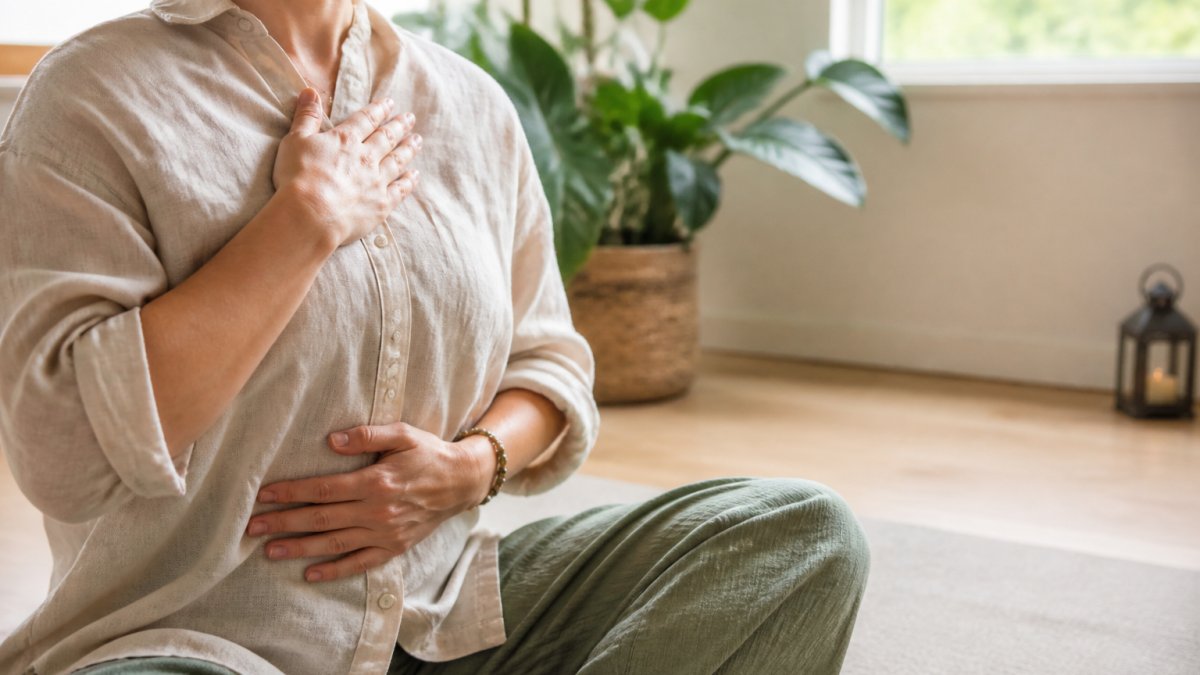
The good news? You can shift this with your breath.
Breathing is one of the few body functions you can control both consciously and unconsciously.
When you practice controlled breathing:
- Your vagus nerve activates, signaling safety to your brain
- Heart rate variability improves, making you more resilient to stress
- Oxygen flow increases, helping your nervous system regulate
- Muscle tension decreases naturally over time
The nervous system doesn't distinguish between real danger and perceived threat. A work deadline triggers the same response as a predator.
This is not about forcing relaxation. It's about giving your nervous system the information it needs to calm down on its own.
Breathing Exercises for Anxiety
Anxiety lives in your body before it lives in your mind. Your chest tightens. Your breath quickens. Your thoughts race. Traditional talk therapy addresses the thoughts, but somatic work addresses the body's response directly.
Breathing exercises for anxiety work because they interrupt the physiological cycle. When you slow your exhale, you activate the vagus nerve. When you hold your breath briefly, you build carbon dioxide tolerance, which reduces panic responses. These techniques are not just calming, they're retraining your nervous system.
The 4-7-8 Breathing Technique
The 4-7-8 breathing technique is simple but powerful. You inhale for 4 counts, hold for 7, and exhale for 8. The longer exhale is what triggers the calming response.
Here's how to do it:
- Sit upright or lie down in a comfortable position
- Inhale through your nose for a count of 4
- Hold your breath for a count of 7
- Exhale slowly through your mouth for a count of 8
- Repeat this cycle 4 times
Start with 4 rounds. As you get comfortable, you can increase to 8 rounds. Many people feel noticeably calmer after just one cycle. The 4-7-8 breathing technique is particularly effective before sleep or when anxiety spikes suddenly.
A common mistake is rushing the exhale. The exhale should feel slow and controlled, almost like you're sighing the air out. This extended exhale is what makes the technique work.
Box Breathing
Box breathing is used by military personnel and athletes because it's grounding and effective. You breathe in for 4 counts, hold for 4, exhale for 4, and hold for 4. The equal counts create a rhythm that anchors your attention.
Here's the step-by-step process:
- Inhale through your nose for 4 counts
- Hold your breath for 4 counts
- Exhale through your mouth for 4 counts
- Hold empty for 4 counts
- Repeat 5-10 times
Box breathing works quickly because the rhythm is easy to remember and the equal holds balance your nervous system. You can do this anywhere, at your desk, in your car, before a difficult conversation. Many people find the symmetry itself calming.
Cyclic Sighing
Cyclic sighing combines two inhales through the nose with one long exhale through the mouth. Research suggests this technique is particularly effective for reducing anxiety and improving emotional regulation.
The technique:
- Inhale through your nose for 4 counts
- Inhale again through your nose (without exhaling) for 4 more counts
- Exhale slowly through your mouth for 8 counts
- Repeat 5 times
The double inhale loads your lungs with oxygen. The extended exhale releases tension. This breathing exercise for anxiety is especially useful when you feel stuck or emotionally blocked.
Diaphragmatic Breathing for Stress Relief
Most people breathe shallowly, using only their chest. Diaphragmatic breathing, breathing from your belly, engages your full respiratory capacity and activates your parasympathetic nervous system more effectively.
Your diaphragm is a muscle beneath your lungs. When you breathe diaphragmatically, your belly expands on the inhale and contracts on the exhale.
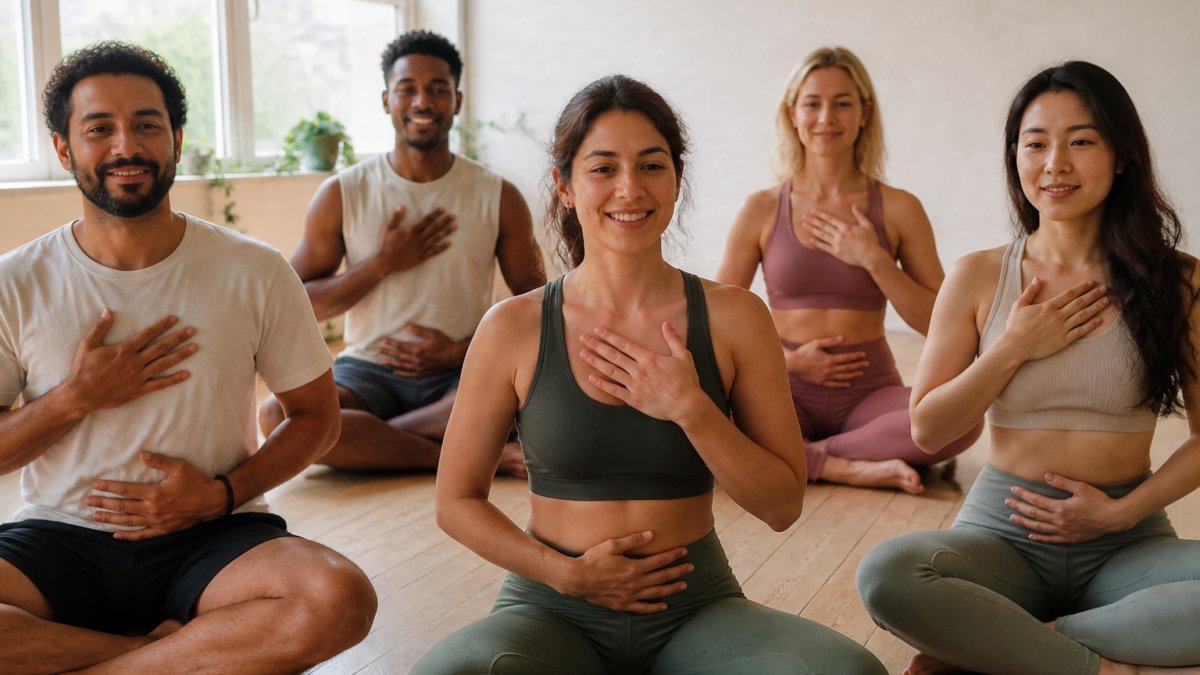
To practice diaphragmatic breathing:
- Lie on your back or sit upright
- Place one hand on your chest, one on your belly
- Inhale through your nose, letting your belly rise (not your chest)
- Exhale through your mouth, feeling your belly fall
- Continue for 5-10 minutes
The hand on your chest should barely move. All the movement should be in your belly. This takes practice if you're used to chest breathing, but it becomes natural quickly.
Diaphragmatic breathing for stress relief is foundational. Once you master this, other breathing exercises become more effective because you're engaging your full respiratory system.
Paced Breathing for Relaxation
Paced breathing means slowing your natural breathing rate to around 5-6 breaths per minute. Most people breathe 12-20 times per minute. Slowing this down signals safety to your nervous system.
The practice is simple:
- Inhale slowly through your nose for 5-6 seconds
- Exhale slowly through your nose (or mouth) for 5-6 seconds
- Continue for 10-20 minutes
You don't need to hold your breath or count specific patterns. The goal is simply to slow down. Paced breathing for relaxation is ideal for bedtime, meditation, or anytime you need sustained calm rather than quick anxiety relief.
Many people find this technique the most accessible because there's no complicated counting or holding. Just slow, gentle breathing.
Three Additional Techniques: Alternate Nostril, Extended Exhale, and Coherent Breathing
Beyond the foundational techniques, three additional approaches round out a complete toolkit for nervous system regulation.
Alternate Nostril Breathing
Alternate nostril breathing balances both sides of your nervous system. You inhale through one nostril, exhale through the other. This technique comes from yoga and is deeply grounding.
The steps:
- Sit upright with your spine straight
- Close your right nostril with your right thumb
- Inhale through your left nostril for 4 counts
- Close your left nostril with your ring finger
- Release your right nostril and exhale for 4 counts
- Inhale through your right nostril for 4 counts
- Close your right nostril and exhale through the left
- Repeat 5-10 cycles
Alternate nostril breathing works because nasal inhalation activates different neural pathways than mouth breathing. This technique is particularly useful when you feel unbalanced or scattered.
Extended Exhale Breathing
Extended exhale breathing is straightforward: your exhale is longer than your inhale. You might inhale for 4 counts and exhale for 6 or 8 counts. The longer exhale is what activates calm.
Simple practice:
- Inhale through your nose for 4 counts
- Exhale through your mouth for 6-8 counts
- Repeat 10 times
The extended exhale is the most direct way to activate your parasympathetic nervous system. This technique works fast and requires no complex counting patterns.
Coherent Breathing
Coherent breathing means breathing at a rate of 5-6 breaths per minute, which research suggests optimizes heart rate variability. You inhale for 5 counts and exhale for 5 counts.
The practice:
- Inhale through your nose for 5 counts
- Exhale through your mouth for 5 counts
- Continue for 20 minutes daily
Coherent breathing is a sustained practice rather than a quick technique. When practiced regularly, it builds resilience to stress and improves your baseline nervous system function.
| Technique | Best For | Duration | Difficulty |
|---|---|---|---|
| 4-7-8 Breathing | Acute anxiety, sleep | 5 minutes | Easy |
| Box Breathing | Grounding, focus | 5-10 minutes | Easy |
| Cyclic Sighing | Emotional release | 5 minutes | Moderate |
| Diaphragmatic Breathing | Foundation building | 5-10 minutes | Easy |
| Paced Breathing | Sustained calm | 10-20 minutes | Easy |
| Alternate Nostril | Balance, clarity | 5 minutes | Moderate |
| Extended Exhale | Quick relief | 3-5 minutes | Easy |
| Coherent Breathing | Long-term resilience | 20 minutes | Easy |
Choosing the Right Breathing Exercise for Your Situation
Not every technique works for every moment. Choosing the right breathing exercise depends on what you need right now.
For acute anxiety or panic: Use 4-7-8 breathing or box breathing.
For emotional overwhelm: Try cyclic sighing.
For bedtime or sustained calm: Practice paced breathing or coherent breathing. These are slower and meant for longer sessions.
For building your foundation: Start with diaphragmatic breathing. Master this first, then layer other techniques on top.
For quick relief during the day: Extended exhale breathing requires no counting and works in under 5 minutes.
Building a Sustainable Practice
One session of breathing exercises nervous system work won't rewire your nervous system. Consistency matters. Your nervous system learns through repetition.
Start small:
- Pick one technique that resonates with you
- Practice for 5 minutes daily for two weeks
- Notice what shifts in your body and mood
- Then add a second technique for different situations
Many people find that morning practice sets the tone for the day. A 5-minute session with diaphragmatic breathing or paced breathing before you check your phone creates a buffer against stress.
Track your practice:
- Note which technique you used
- Write down how you felt before and after
- Track your sleep quality, anxiety levels, or energy
- Look for patterns over weeks and months
Progress isn't always linear. Some days your nervous system will respond quickly. Other days it takes longer. This is normal. Your nervous system learns through consistency, not perfection.
Safety, Adaptations, and When to Pause
Breathing exercises are generally safe, but some adaptations matter for specific situations.
If you have asthma or respiratory conditions: Consult your healthcare provider before starting a new breathing practice.
If you feel lightheaded or dizzy: Stop immediately. You may be overbreathing.
If you have anxiety about control: Breathing exercises require conscious attention, which some anxious people find triggering.
If you're pregnant: Most breathing exercises are safe, but avoid breath holds.
Common adaptations:
- Reduce your counts if 4-7-8 feels too long
- Breathe through your mouth instead of your nose if nasal breathing triggers you
- Sit instead of lying down if lying down feels vulnerable
- Use shorter sessions (2-3 minutes) if longer ones feel overwhelming
When to pause your practice:
- During acute panic attacks (focus on grounding instead)
- If a technique consistently triggers anxiety
- If you're in active crisis (seek professional support first)
The goal is not to force your nervous system into calm.
Your nervous system didn't learn to be dysregulated overnight, and it won't rewire overnight either.
If you're ready to go deeper, to explore how your nervous system responds to intimacy, touch, and connection, The BodyVox offers somatic coaching and specialized immersions designed to help you reconnect with your body in safe, embodied ways. Book a call to explore how somatic work can support your healing journey.
Frequently Asked Questions
Which breathing exercise is best for anxiety?
The best breathing exercise for anxiety depends on your situation and what your nervous system responds to. Box breathing and the 4-7-8 breathing technique are widely used for acute anxiety because the counting and rhythm create focus and calm. If you feel panicked, box breathing's equal counts (4-4-4-4) can feel more grounding. For chronic anxiety, paced breathing practiced regularly trains your nervous system over time. Start with whichever technique feels most natural to you, and adjust based on what brings relief.
How often should you practice breathing exercises?
Consistency matters more than duration. Practicing five minutes daily is more effective than thirty minutes once a week. For stress relief in the moment, use breathing exercises as needed when you notice tension or anxiety. For nervous system training, aim for a regular practice five to seven days per week. Many people find morning or evening practice easiest to maintain. Track what feels sustainable for your life, and adjust the frequency based on your results.
Can slow breathing help you feel more grounded?
Yes. Slow, controlled breathing activates your parasympathetic nervous system, which is responsible for rest and recovery. When you slow your breathing, you signal safety to your body, which reduces heart rate and lowers stress hormones. This is why grounding techniques often include slow breathing. Paced breathing and diaphragmatic breathing are particularly effective for grounding because they combine slowness with awareness of your body, making them useful when you feel disconnected or overwhelmed.
Can breathwork heal your nervous system?
Breathwork can help retrain your nervous system's response to stress. Regular practice of breathing exercises strengthens your ability to shift from fight-or-flight to rest-and-digest states. Over time, this can reduce your baseline stress level and improve your resilience. However, breathwork alone is not a substitute for professional support if you are dealing with trauma or serious anxiety. Many people find breathwork most effective when combined with other somatic practices, therapy, or coaching that addresses the root of your nervous system dysregulation.