 How-to
Can Somatic Grounding Techniques Prevent Panic Attacks?
Last Updated: November 14, 2026
Quick Summary
Somatic grounding techniques can help prevent panic attacks by calming the nervous system before a panic spike takes hold, and they work best as a daily habit rather than an emergency tool. Practicing these body-based skills when calm builds the muscle memory you need when panic starts, so you notice early warning signs and respond with your body first.
- Somatic grounding adds internal body awareness, while sensory grounding points attention outward through the five senses.
- In clench and release, tense muscles at about seventy percent of your strength for five seconds, then release for ten.
- Follow the two-week rehearsal schedule, practicing clench and release morning and evening on days 1 to 3.
- If a technique has not helped after about two minutes, stop and switch to a different sense or body area.
- Seek prompt medical attention for chest pain, fainting, or symptoms that feel new or severe.
Table of Contents
- Why Somatic Grounding Techniques Work for Panic Attack Prevention
- Grounding Techniques for Panic Attacks: What the Research Says
- Somatic Grounding Exercises You Can Practice Before Panic Starts
- Sensory Grounding Techniques: Sight, Sound, Touch, Smell, and Taste
- The 3-3-3 Rule for Panic Attacks and How to Adapt It
- Breathing and Visualization: Slower Exhales, Box Breathing, and Attention Shifting
- What to Do When Grounding Does Not Help
- Building a Daily Somatic Practice with The BodyVox
- Frequently Asked Questions
Why Somatic Grounding Techniques Work for Panic Attack Prevention
Somatic grounding techniques for panic attack prevention are body-based practices that calm the nervous system before a panic spike takes hold.
Panic often starts below conscious thought: heart rate climbs, breathing turns shallow, muscles tighten before your mind names what is happening.
A common mistake is waiting until panic peaks to try a technique. By then the thinking brain is offline and focus is hard to find.
How Somatic Grounding Differs from General Sensory Grounding
General sensory grounding uses your five senses to pull attention back to the present moment. You might name what you see or listen for sounds in the room. That approach is useful and simple.
Somatic grounding goes further, adding internal body awareness: muscle tension, weight, posture, breath, and temperature inside the body. Sensory grounding points attention outward; somatic grounding asks you to feel your body from the inside.
The difference matters for prevention. A racing mind can describe a room and still stay panicked. For a deeper walkthrough, see our grounding for trauma recovery guide.
Grounding Techniques for Panic Attacks: What the Research Says
Grounding techniques for panic attacks are commonly described in trauma-informed care as a way to shift attention to physical sensation.
Clinicians describe grounding as a way to interrupt the loop between frightening thoughts and physical panic symptoms.
Some resources focus on what to do mid-panic; practicing these skills daily can help make them available when needed.
The National Institute of Mental Health overview of panic disorder notes that panic disorder is treatable and that body-based and behavioral approaches are part of many care plans.
Somatic Grounding Exercises You Can Practice Before Panic Starts
These somatic grounding exercises are designed for calm moments, so your body learns them before panic arrives. Rehearsing a skill when calm can make it easier to access when your heart rate jumps.
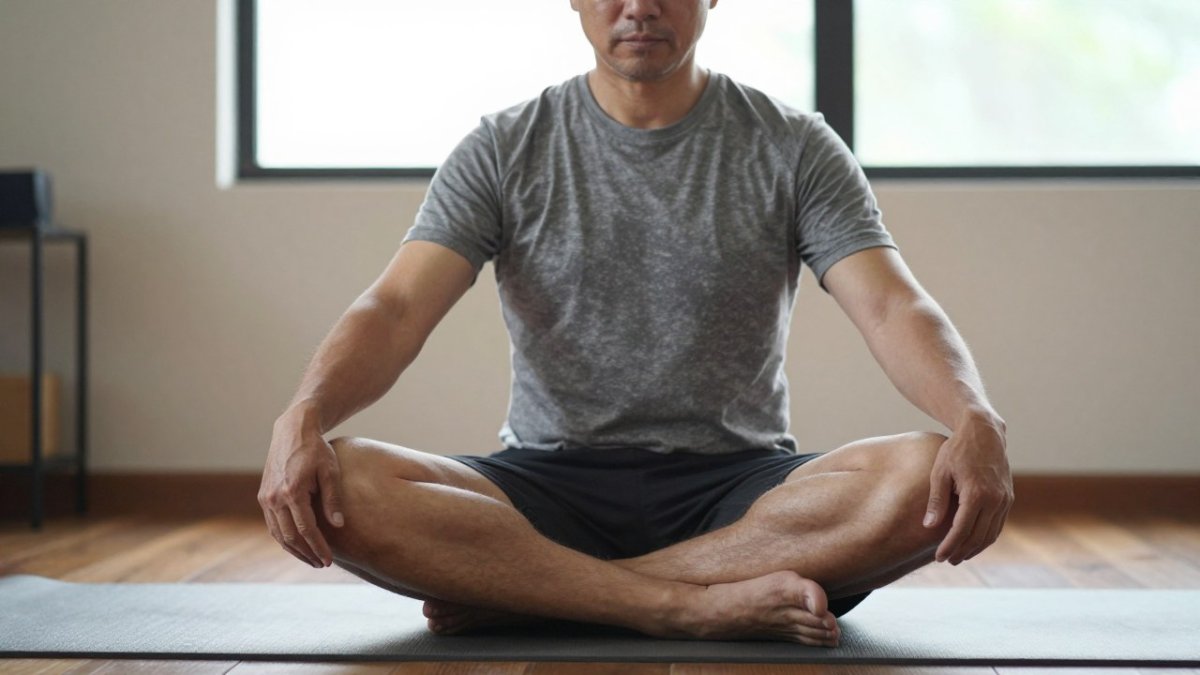
Think dose, not duration. Short, frequent practice may be easier to sustain than occasional long sessions. Track two things only: how quickly you notice tension, and how quickly it drops when you release.
Clench and Release: Muscle Tension as a Somatic Anchor
Clench and release teaches the difference between tension and relaxation through proprioceptive contrast: your nervous system learns the boundary between contracted and resting muscle, making early tension easier to catch.
- Sit or lie down. Take one normal breath.
- Tense your hands into loose fists at about seventy percent of your strength for five seconds.
- Release completely and notice the drop for ten seconds before moving on.
- Repeat with forearms, shoulders, jaw, belly, thighs, and feet.
- Finish with three slow breaths and scan for any tension left behind.
The release is the point. Most people carry low-level tension without noticing it, especially in the jaw, shoulders, and hands.
Watch out: clenching too hard, or clenching the jaw when you have jaw pain or TMJ issues, can increase tension instead of releasing it.
Feet on the Ground: Standing and Stomping to Reconnect
Feet on the ground is one of the simplest somatic grounding exercises. It draws on pressure feedback from the soles of your feet and engagement of large leg muscles.
- Stand with your weight evenly spread and knees soft.
- Press your feet down and notice the floor pushing back for five slow breaths.
- Shift weight slowly left and right, feeling the change in pressure.
- Stomp gently, one foot at a time, and feel the impact travel up your legs.
- Finish by standing still and noticing where your body meets the ground.
At a desk or on public transit, press your feet down and hold for a few breaths. The signal is simple: your body is supported and planted. This version is quiet and draws no attention.
Hand on Chest, Hand on Belly: Co-Regulation Through Touch
This exercise pairs touch with slow breathing and suits people who find closed-eye body scans uncomfortable. Place one hand on your chest and one on your belly, and breathe so the lower hand moves first.
Watch out: if chest touch feels distressing, move both hands to your belly or thighs, or skip this one and use feet on the ground instead. Discomfort is information, not failure.
A Two-Week Rehearsal Schedule
Prevention depends on repetition, so give the practice a shape:
- Days 1-3: Clench and release only, once in the morning and once in the evening.
- Days 4-7: Add feet on the ground. Alternate the two exercises.
- Days 8-11: Add hand on chest, hand on belly. Pick the two that settle you fastest.
By the end of two weeks you should know which exercise you reach for first and be able to run it in under two minutes without thinking through the steps. That is the muscle memory prevention depends on.
The article lays out a two-week rehearsal schedule for building these exercises into a habit.
| Phase | What to practice | Frequency |
|---|---|---|
| Days 1-3 | Clench and release only | Once in the morning and once in the evening |
| Days 4-7 | Add feet on the ground; alternate the two exercises | Not specified |
| Days 8-11 | Add hand on chest, hand on belly; pick the two that settle you fastest | Not specified |
| Days 12-14 | Practice your top two in a mildly stressful moment | Before a meeting, commute, or difficult email |
Sensory Grounding Techniques: Sight, Sound, Touch, Smell, and Taste
Sensory grounding techniques use your five senses as anchors to the present moment. Try each one when calm to learn which settles you fastest.
- Sight: Name five things you can see, including color and shape.
- Sound: Listen for three sounds, near and far.
- Touch: Feel one texture, like fabric or a cool surface.
Temperature can serve as an anchor. A cold object, like an ice cube or a cool glass, provides sensory feedback that may draw attention outward.
The 5-4-3-2-1 Method
The 5-4-3-2-1 method is a structured sensory grounding exercise that walks you through all five senses in order. Name five things you see, four you can touch, three you hear, two you smell, and one you taste. It is portable and needs no equipment.
The method can work well as a practiced habit. Run through it once a day when calm so the sequence feels automatic. During an anxiety spike, you will not have to think hard about the steps.
The 3-3-3 Rule for Panic Attacks and How to Adapt It
The 3-3-3 rule for panic attacks asks you to name three things you see, three sounds you hear, and then move three body parts. That last step adds movement, not just observation.
Adapt it to your needs. If movement is hard, swap in three slow breaths. If sound is overwhelming, focus on three textures instead. The rule is a frame, not a fixed script.
Watch out: forcing a technique that feels wrong can add frustration. If one step increases distress, drop it and choose another. Choice is part of safety.
Breathing and Visualization: Slower Exhales, Box Breathing, and Attention Shifting
Breathing is a direct line to the nervous system. Slow breathing with a longer exhale is a practice some people find calming.
Box breathing uses an even rhythm: inhale for four, hold for four, exhale for four, hold for four.
Visualization adds attention shifting. Picture a calm place with specific detail: temperature, light, and sound. For more options, browse our breathing exercises for nervous system health.
What to Do When Grounding Does Not Help
Sometimes grounding does not work, and that is not a personal failure. Panic can be intense, and a single technique will not always land. Grounding is a coping skill that some people find helpful for distress.
A common pattern is forcing one technique harder when it is not working. When grounding isn't landing, you can explore vagus nerve stimulation techniques for anxiety as another body-based option.
A Simple Decision Guide
Match the next step to what you are actually experiencing:
- Racing thoughts, mind won't slow: switch to a stronger physical input, feet on the ground with gentle stomping, or a cold object in your hand.
- Feeling detached or unreal: use touch and temperature rather than sight. Press your palms together, hold something cold, or name textures you can feel.
- Muscle tension or jaw clenching: use clench and release on the area that is tightest, then scan for the next tight spot.
Switch, Don't Force
If a technique has not helped after about two minutes, stop and switch to a different sense or body area. Trying three techniques badly is worse than trying one well. If nothing lands, reduce the demand: stop trying to calm down and simply describe what you notice, "tight shoulders, fast breath, cold hands." Naming sensation without trying to change it is itself a somatic skill and is often easier under pressure.
Watch out: breath focus makes some people more anxious, especially if they have a history of panic or trauma. If watching your breath increases distress, use external anchors like feet, temperature, or texture instead. You are not required to use breathing.
When to Reach Out
Reach out to a trusted person and say what you feel, out loud, specifically.
Seek prompt medical attention if you have chest pain, fainting, or symptoms that feel new or severe. Grounding is a coping skill, not a diagnosis tool.
A realistic goal is progress, not perfection: fewer spikes caught early, shorter spikes when they happen, and more confidence that you have options.
Building a Daily Somatic Practice with The BodyVox
A daily somatic practice turns these techniques into reliable skills. Pick one exercise, practice it at the same time each day, and track how your body responds.
At The BodyVox, we use a trauma-informed, client-led approach to help people reconnect with body awareness and calm. If you are starting out, our nervous system regulation exercises for beginners give you a simple foundation.
You can also explore our somatic therapy guide for physical anxiety to apply these skills to physical symptoms.
Panic prevention asks for steady practice, not perfection. The BodyVox offers somatic, body-based coaching with a trauma-informed and consent-focused method, tailored to your nervous system.
Frequently Asked Questions
What are some somatic techniques that can help with panic attacks?
Somatic techniques focus on body sensations rather than thoughts. Try clench-and-release muscle tension, pressing your feet firmly into the floor, slow diaphragmatic breathing with a longer exhale, or holding a cold object to anchor your attention. These approaches work by giving your nervous system a concrete physical signal to settle, which can interrupt the escalation of panic symptoms before they peak.
How can grounding techniques help prevent a panic attack?
Grounding techniques for panic attacks work best when practiced regularly, not only during a crisis. Rehearsing somatic grounding exercises when you are calm builds body awareness so you notice early warning signs, such as shallow breathing or muscle tightening, sooner. That earlier detection gives you time to use a sensory anchor or breathing exercise before panic symptoms fully take hold.
What is the 3-3-3 rule for panic attacks?
The 3-3-3 rule asks you to name three things you can see, three sounds you can hear, and three parts of your body you can move or feel. It is a quick sensory grounding technique that pulls attention into the present moment. You can adapt it by choosing three textures to touch or three slow breaths to take, depending on what feels safest for you.
Can grounding exercises make panic or trauma symptoms worse?
For some people, especially trauma survivors, close attention to body sensations can feel overwhelming. If an exercise increases distress, stop and try a external focus instead, such as naming objects in the room or feeling the temperature of a cold object. A trauma-informed practitioner can help you adapt somatic grounding exercises to your nervous system and boundaries.