 How-to
Somatic Exercises for Sexual Anxiety: A Step-by-Step Guide
Last Updated: November 12, 2026
Quick Summary
Somatic exercises are simple, body-based practices that help you notice physical sensations and slowly calm your nervous system. Instead of only talking through worry, they work from the body up, which can help when anxiety shows up as tension, shallow breathing, or feeling disconnected during intimacy.
- Start with five to ten minutes a day, practiced alone and calm first.
- Extended exhale breathing: inhale for four counts, exhale slowly for six, for three to five minutes.
- Set a stopping cue and a modification option before any exercise with a partner.
- Consent comes first, and stopping is treated as a successful practice.
- Seek professional or trauma-informed support for panic, dissociation, or lasting anxiety.
Table of Contents
- What Somatic Exercises Are and How They Relate to Sexual Anxiety
- How Stress and Anxiety Show Up in the Body During Intimacy
- Step-by-Step Somatic Exercises for Calming Sexual Anxiety
- Using Somatic Practice to Support Nervous System Regulation
- Consent, Stopping Cues and Adapting Exercises With a Partner
- A Gradual Practice Plan and How to Track Progress
- When Sexual Anxiety Needs Professional or Trauma-Informed Support
- Frequently Asked Questions
What Somatic Exercises Are and How They Relate to Sexual Anxiety
Somatic exercises are simple, body-based practices that help you notice physical sensations and slowly calm your nervous system.
Sexual anxiety often lives in the body before it reaches the mind.
Somatic therapy is a broader field that uses body awareness as part of emotional work.
Here is what most people find helpful:
- Body awareness: Noticing where you feel tension, warmth, or numbness
- Slow breathing: Lengthening the exhale to signal safety
- Gentle movement: Shaking, stretching, or rocking to release stored tension
Research on the mind-body connection continues to grow, but the evidence for specific sexual anxiety outcomes is still limited.
How Stress and Anxiety Show Up in the Body During Intimacy
Anxiety during sex rarely feels like a single thought. It usually shows up as physical signals. Many people notice a shallow chest, shaky legs, or a sense of leaving their body altogether.
Common body signs include:
- Shallow or held breathing
- Clenched hips, thighs, or pelvic floor
- Numbness or feeling "far away" from sensation
These responses are the body's stress reaction doing its job. The problem is that intimacy requires the opposite state, where you feel safe enough to relax and receive.
Step-by-Step Somatic Exercises for Calming Sexual Anxiety
Start with short sessions. Five to ten minutes a day is enough for most beginners. Practice when you are alone and calm first, then try these skills during intimacy only when you feel ready.

Before any exercise, set two things: a stopping cue (a word like "pause" or a hand signal) and a modification option (a slower count, a smaller movement, or simply opening your eyes). You are allowed to stop at any point, and stopping is a successful practice, not a failure.
Breathing and Grounding Exercises
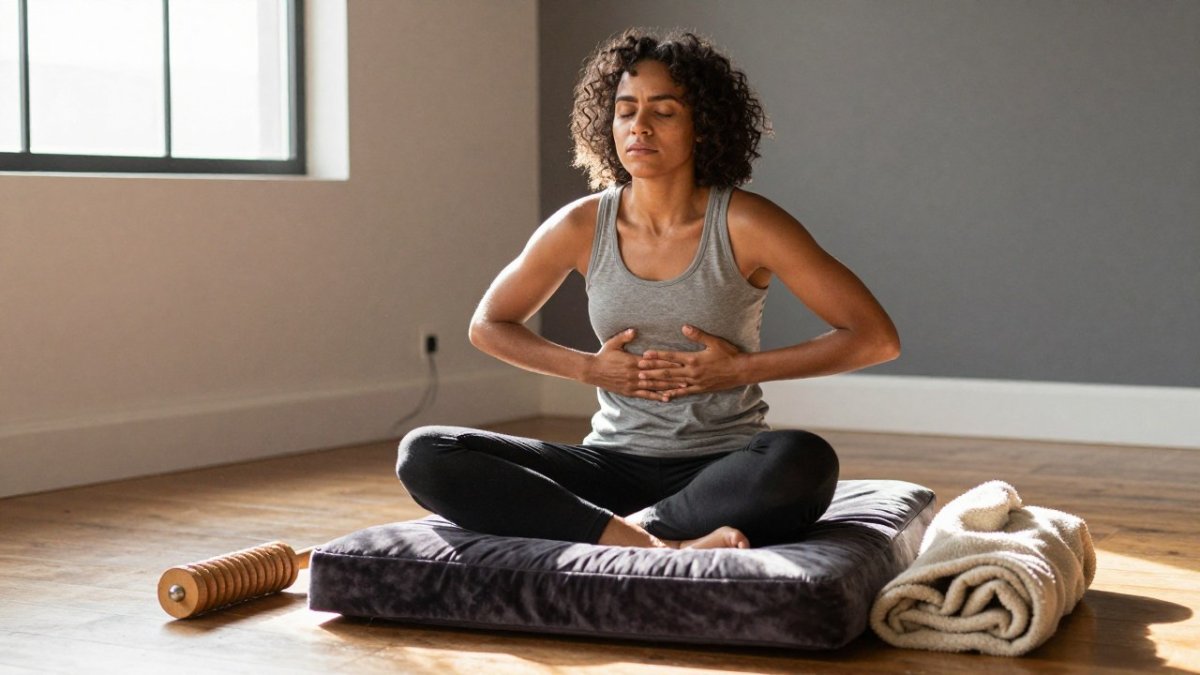
Step 1: Extended exhale breathing (3-5 minutes)
- Sit comfortably with your feet flat on the floor.
- Inhale through your nose for a count of four.
- Exhale slowly through your mouth for a count of six.
- Repeat for three to five minutes.
For intimacy, practice this before any physical contact and again if you notice your breath going shallow.
Step 2: Feet-to-floor grounding (2 minutes)
- Press your feet firmly into the floor.
- Notice the pressure, temperature, and texture.
- Name three things you can see in the room.
During intimacy, grounding can be as simple as pressing your heels into the mattress or noticing the weight of your body on the surface beneath you.
Watch out: Do not force deep breaths. Forced breathing can increase dizziness and panic for some people.
Body Scans and Progressive Muscle Release
Step 1: Head-to-toe body scan (5 minutes)
- Lie down or sit with your eyes closed.
- Move your attention slowly from your forehead to your toes.
- At each area, notice sensation without changing it.
A shorter intimacy version: scan only from your jaw to your hips, spending a few seconds on your jaw, shoulders, belly, and pelvic floor. The goal is to notice where you are holding tension, not to relax on command.
Step 2: Tense and release (5 minutes)
- Tighten your pelvic floor and thighs for five seconds.
- Release completely and notice the difference.
- Repeat with your shoulders, jaw, and hands.
Many people find that releasing tension in one area helps the rest of the body follow. Pay attention to what changes, even slightly.
Gentle Movement and Shaking
Step 1: Standing shake-out (2 minutes)
- Stand with your knees soft.
- Shake your hands and forearms for 20 seconds.
- Let the shake move into your legs and hips for another 20 seconds.
- Stop and stand still, noticing what feels different.
Shaking is a way to discharge held tension without stretching or effort. Some people find it calming; others find it energizing. Notice which one you get, and use it before intimacy only if it settles you.
Step 2: Rocking or swaying (3 minutes)
- Sit or lie down and begin a slow, small rock side to side or front to back.
- Keep the movement gentle and rhythmic.
- Let your breath follow the rhythm rather than controlling it.
Rhythmic movement can be soothing for a nervous system that is on alert. With a partner, you can sway together while holding hands, which adds contact without performance pressure.
Self-Tapping and Self-Soothing
Step 1: Hand tapping (2 minutes)
- Tap the side of your hand with the fingers of the other hand in a slow, even rhythm.
- Tap your collarbone area lightly.
- Continue for one to two minutes while breathing normally.
Tapping is a simple way to give your nervous system a predictable, gentle input. It is not a substitute for trauma treatment, but it can be a useful reset before or during intimacy when you notice early signs of anxiety.
Step 2: Temperature and texture anchor (1 minute)
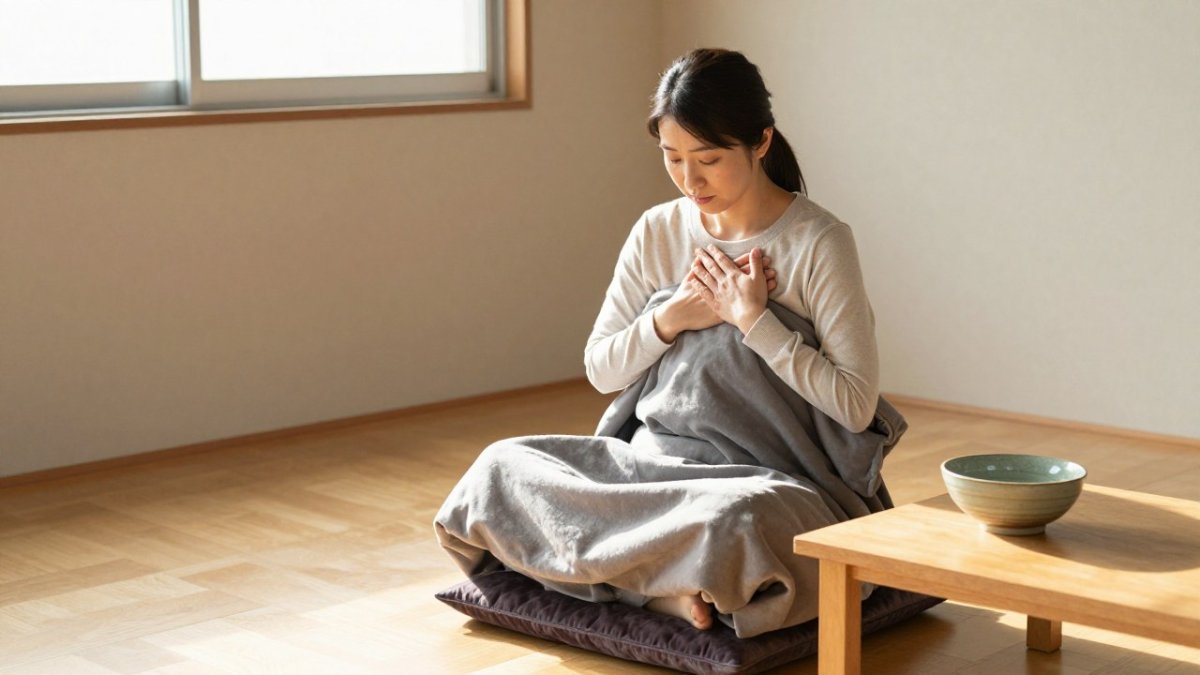
- Hold something cool or textured, such as a glass of water or a soft blanket.
- Describe the sensation to yourself in one sentence.
This is a quick grounding tool you can use discreetly, including during intimacy, without needing to explain what you are doing.
Adapting Any Exercise in the Moment
Use these three questions to adjust an exercise on the spot:
- Is my breath moving, or am I holding it?
- Can I feel my feet, seat, or hands?
- Do I want to continue, slow down, or stop?
If the answer to the last question is "stop," stop. A short practice that ends on your terms builds more trust with your body than a longer one you push through.
The article's core exercises are summarised below, with the time or frequency it gives for each.
| Exercise | Time or frequency | Key instruction |
|---|---|---|
| Extended exhale breathing | 3-5 minutes | Inhale for four, exhale slowly for six |
| Feet-to-floor grounding | 2 minutes | Press feet into floor, name three things you see |
| Head-to-toe body scan | 5 minutes | Move attention from forehead to toes |
| Tense and release | 5 minutes | Tighten for five seconds, then release fully |
| Standing shake-out | 2 minutes | Shake hands, forearms, then legs and hips |
| Rocking or swaying | 3 minutes | Slow, small rhythmic movement with breath |
| Hand tapping | 2 minutes | Tap side of hand and collarbone lightly |
| Temperature and texture anchor | 1 minute | Hold something cool or textured, describe it |
Time or frequency
Using Somatic Practice to Support Nervous System Regulation
Nervous system regulation means moving between alert and calm states with ease. Somatic exercises build that flexibility over time. Each time you notice tension and then soften it, you practice a skill your body can use during stressful moments.
A helpful way to think about this is to treat calm as something you practice, not something you wait for. Short daily practice tends to build more lasting change than occasional long sessions.
Consent, Stopping Cues and Adapting Exercises With a Partner
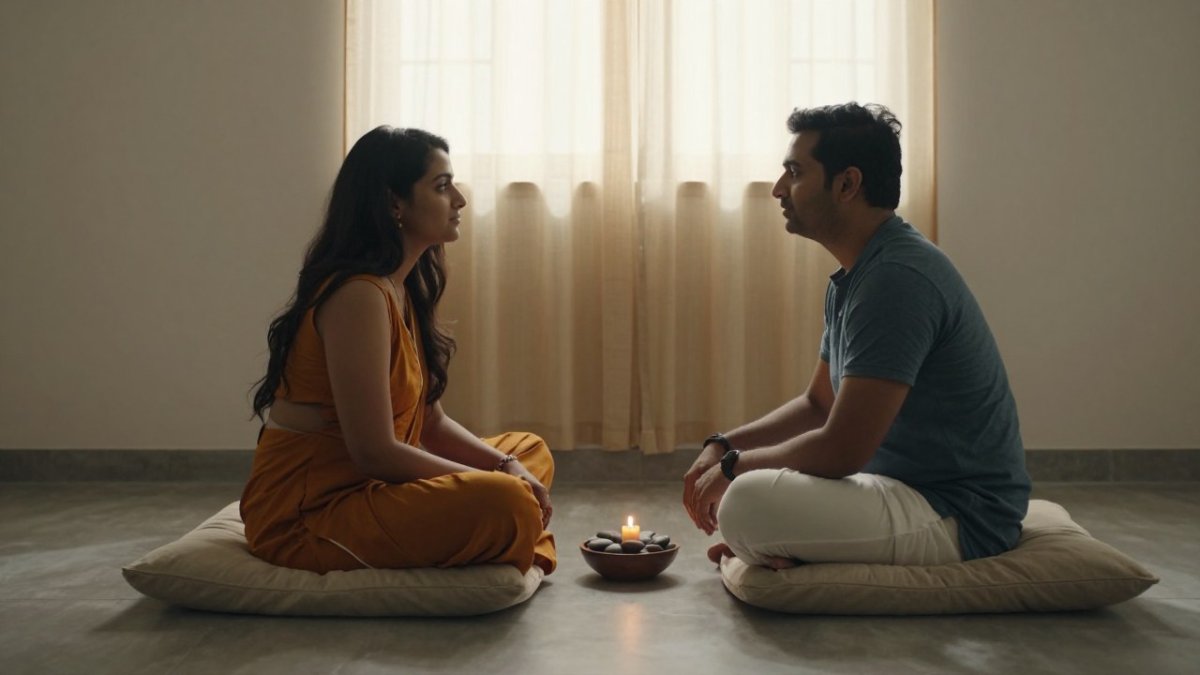
Consent must come first, every time. Before you practice with a partner, agree on what you will try and what will happen if either of you wants to stop.
Set clear stopping cues before you begin. For guidance on putting limits into words, see how to communicate sexual boundaries clearly.
A practical way to adapt exercises with a partner:
- Start with non-sexual touch, such as hand-holding or seated back rubs
- Keep the exercise on your side, such as breathing together or pressing feet to the floor
- Ask your partner to match your breathing instead of guiding them
Partners should never pressure each other to "get past" anxiety. If you are unsure how to open that conversation, start the talk about sexual anxiety with your partner.
A Gradual Practice Plan and How to Track Progress
A practice plan can help you decide what to do each week, how often, and how to tell whether it is helping. The plan below is built around three phases, before intimacy, during intimacy, and after intimacy, so the skills transfer to the moments you actually care about.
Phase 1: Build the Skill Alone (Weeks 1-2)
Practice when you are calm and alone, so the exercise is familiar before you need it.
- Week 1: Extended exhale breathing, 5 minutes daily. Add feet-to-floor grounding once a day.
- Week 2: Add the head-to-toe body scan, 10 minutes, three to four times. Keep the breathing and grounding daily.
Goal for this phase: you can do each exercise without reading instructions, and you know which one settles you fastest.
Phase 2: Practice Before and After Intimacy (Weeks 3-4)
- Week 3: Before any intimate contact, do 2 minutes of extended exhale breathing and 1 minute of grounding. Afterward, do a 2-minute body scan and note what you noticed.
- Week 4: Add tense-and-release before intimacy if you carry tension in your jaw, shoulders, or hands. Add hand tapping as a reset if anxiety spikes mid-encounter.
Goal for this phase: you use at least one skill before intimacy without needing to plan it in advance.
Phase 3: Practice During Intimacy (Weeks 5-6)
- Week 5: Choose one in-the-moment skill, grounding, a slower exhale, or a discreet hand tap, and use it once during intimacy. You do not need to tell your partner unless you want to.
- Week 6: Use your stopping cue at least once in a low-stakes moment, even if you do not need to stop. Practicing the cue when nothing is wrong makes it easier to use when something is.
Goal for this phase: you can interrupt an anxiety spike during intimacy with a skill you have already practiced.
How to Track Progress
Keep a simple log with four fields:
- Date and exercise
- Tension before (1-10)
- Tension after (1-10)
Some people find that tension ratings drop within a session and that the drop can become larger over time. Progress is rarely a straight line. Expect good days and harder days, and keep the practice gentle on both.
Signs the Plan Is Working
Look for these markers rather than waiting for anxiety to disappear:
- You notice tension earlier than you used to.
- You recover faster after an anxious moment.
- You use a skill without needing to remind yourself.
If none of these appear after six weeks of regular practice, that is useful information, it may mean the exercises need to be adapted, or that professional support would help. See the section below on when to seek more support.
When Sexual Anxiety Needs Professional or Trauma-Informed Support
Self-guided practice can help with everyday nervousness, but some situations call for more support. Consider reaching out to a qualified professional if you notice any of the following:
- Anxiety that stays strong for weeks or keeps getting worse
- Panic, dissociation, or feeling unsafe during or after intimacy
- Pain, bleeding, or physical symptoms that have not been checked by a doctor
Some signs, such as chest pain, fainting, or severe shortness of breath, need urgent medical care. Contact a doctor or emergency services right away.
Trauma-informed support puts your safety and choice at the center. To weigh the cost and time involved, you can read whether somatic therapy is worth it for anxiety.
If you prefer to work through the basics first, you can also read mindful breathing techniques for sexual anxiety or explore nervous system regulation exercises for beginners before you decide on next steps.
Frequently Asked Questions
Can somatic exercises help with sexual anxiety?
Somatic exercises can help some people notice and ease the physical tension that often comes with sexual anxiety, such as a tight chest, shallow breathing or a body that feels far away. They work by bringing attention to sensation and slowing the stress response, which may make intimacy feel more manageable. Results vary, and these exercises support rather than replace care from a qualified professional. Start with short sessions outside of sex, and stop any practice that feels overwhelming.
What somatic movements can help with anxiety?
Gentle movements such as slow stretching, shaking out the arms and legs, rocking, or gently tapping the chest and arms can help discharge built-up tension. Many people find that small, slow movements feel safer than large ones. Pair each movement with attention to how the body feels before and after. Choose movements that feel comfortable and skip any that cause pain or distress.
How can grounding exercises help with anxiety during intimacy?
Grounding brings attention back to the present by noticing contact points such as feet on the floor, the weight of your body, or the temperature of the air. During intimacy, a short grounding pause can interrupt a spiral of worry about performance. You can also name three things you can see or feel. Using a grounding cue before or during sex gives you a way to return to your body without needing to explain it to a partner.
When should I seek professional help for sexual anxiety?
Consider speaking with a licensed therapist or sex therapist if sexual anxiety persists for weeks, affects your relationships or self-esteem, or includes panic, dissociation or memories of unwanted experiences. Pain during sex, unexplained physical symptoms or changes in desire also warrant a medical evaluation. A qualified professional can assess your situation and suggest options. Self-practice is a helpful complement, not a substitute for that support.