 blog
blog
Best Somatic Intimacy Coaching Programs 2026
Table of Contents
- What Is Somatic Intimacy Coaching?
- Key Components of Certification Programs
- Somatic Sex Coach Certification Requirements
- How to Practice Polyvagal Theory for Intimacy
- Trauma-Informed Care and Experiential Learning Methods
- Choosing the Right Program for Your Needs
- Post-Certification Support and Career Longevity
- Frequently Asked Questions
Last Updated: September 20, 2026
What Is Somatic Intimacy Coaching?
Somatic intimacy coaching programs offer a body-centered approach to healing relationship and sexual disconnection through nervous system awareness and embodied practice. Coaches guide clients to feel their way toward resolution using breath, movement, touch awareness, and nervous system regulation techniques.
Somatic work recognizes that trauma, shame, and disconnection live in the body itself, in muscular tension, breath patterns, and nervous system dysregulation. A somatic intimacy coaching program teaches practitioners to work with these embodied patterns directly, creating lasting change that talk therapy alone often cannot achieve.
Many clients arrive after years of traditional therapy feeling stuck. By learning to recognize and regulate your own nervous system through somatic methods, you develop the capacity to experience genuine embodied connection with yourself and partners.
Key Components of Certification Programs
Legitimate somatic intimacy coaching programs combine theoretical knowledge with extensive hands-on practice, distinguishing them from weekend workshops or online courses that claim expertise.
Most quality programs include trauma-informed training as a foundational pillar, teaching practitioners to recognize nervous system dysregulation and support clients back toward regulation without re-traumatizing them.
Experiential learning forms the backbone of legitimate certification. You practice somatic work on yourself, with fellow trainees, and under supervision through guided body scans, partner exercises, and live practicum hours with real clients.
Comprehensive certifications typically demand 300-500+ hours, including didactic instruction, supervised practice, personal therapy or coaching for the practitioner, and ongoing clinical supervision.
Look for programs aligned with recognized professional bodies that maintain ethics codes, require continuing education, and hold practitioners accountable.
Somatic Sex Coach Certification Requirements
Most comprehensive programs require 300-500 documented training hours: classroom instruction in anatomy, neurobiology, attachment theory, and trauma-informed methodology; supervised practicum hours with actual clients; and personal coaching or therapy sessions, since you cannot guide others through nervous system regulation without that embodied experience.
Programs assess competency in recognizing polyvagal responses, guiding co-regulation safely, understanding consent and boundaries, and working with sexual identity, trauma history, and desire while honoring client autonomy.
Many programs require practitioners to complete a personal immersion or retreat before certifying, ensuring embodied understanding of the work and direct experience of nervous system shifts. Options like Private 1:1 Immersions for Individuals and Couples or Somatic Sensual Retreats for GBTQ Men exemplify the kind of intensive, embodied learning that deepens practitioner capacity before and after certification.
Ongoing education is typically required post-certification, as ethical practice demands coaches stay current with emerging research and evolving field standards.
How to Practice Polyvagal Theory for Intimacy
Polyvagal theory explains how the vagus nerve regulates nervous system state through three primary states: social engagement (safe, connected), sympathetic activation (mobilized, aroused), and dorsal vagal (shut down, dissociated).
In intimacy, most people struggle because they're operating from the wrong vagal state. Someone with trauma history might shift into dorsal vagal shutdown during intimate touch because their nervous system reads closeness as threat, while another person might stay chronically in sympathetic activation, unable to relax into pleasure.
Practical somatic intimacy coaching teaches you to recognize these states. Before intimate connection, notice your breathing, heart rate, and body temperature. Naming your state is the first step toward shifting it.
Vagal toning exercises, humming, singing, slow breathing with extended exhales, build capacity for the social engagement state. Partner exercises in synchronized breathing or gentle touch awareness help two people co-regulate, enabling genuine intimacy.
The work isn't about forcing yourself into arousal or pleasure. It's about creating the nervous system conditions where authentic desire can emerge. When your system feels safe, when you're regulated and present, intimacy shifts from performance to genuine embodied connection.
Trauma-Informed Care and Experiential Learning Methods
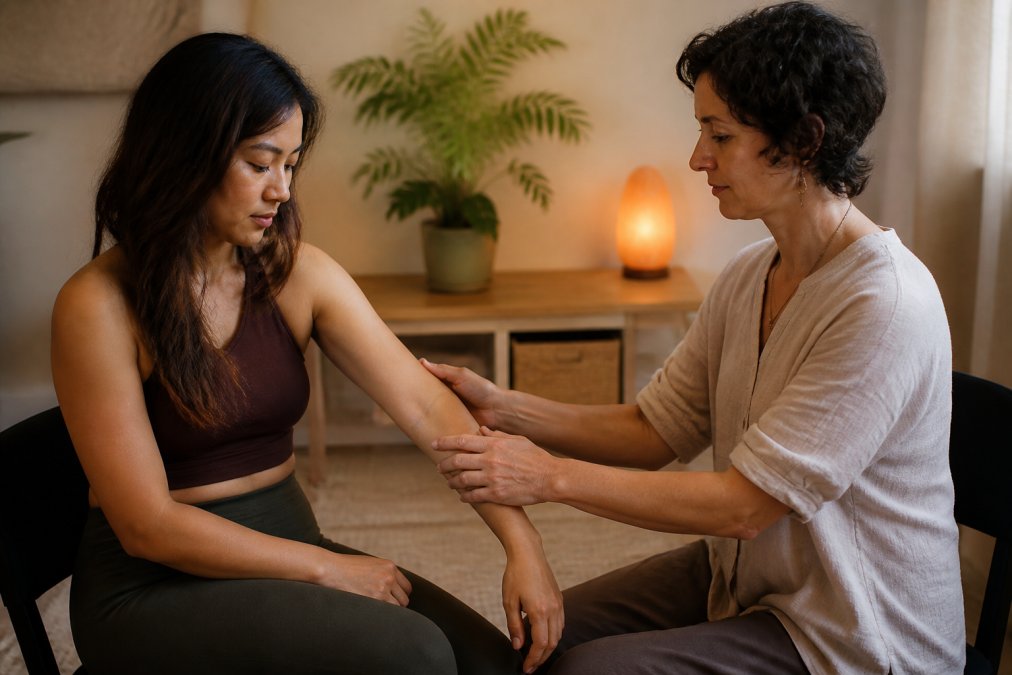
Trauma-informed care means understanding that many people seeking intimacy coaching carry unprocessed nervous system activation. A trauma-informed practitioner creates conditions where the client can lead, say no, and pause without shame.
Consent is non-negotiable and ongoing, a continuous check-in, not a one-time agreement. A trauma-informed coach honors when a client realizes mid-way that an exercise is triggering, without judgment or pressure.
Experiential learning means the client experiences nervous system change directly. You might learn about vagal regulation in a lecture, but you feel it when a coach guides you through a breathing practice and you notice your heart rate slow and shoulders drop. That embodied knowing creates lasting change.
Many programs use guided body awareness exercises and partner work under supervision. A body scan often reveals where someone is holding tension, dissociating, or bracing against pleasure, making change possible.
Coaches learn through doing, not just observing. You practice exercises yourself, work with fellow trainees, and experience vulnerability. This direct experience builds the somatic literacy and empathy that makes you effective with clients.
Choosing the Right Program for Your Needs
The market ranges from legitimate, rigorous trainings to weekend workshops that overstate credential value. Distinguishing between them requires asking specific questions about what separates professional-grade certification from credentials that lack field weight.
Training Hours and Structure
A reputable program requires 300-500 documented hours minimum, but distribution matters. Ask how many are supervised practicum (working with real clients under mentor observation) versus didactic instruction. The strongest programs require at least 100-150 documented supervised practice hours where a mentor observes, provides feedback, and signs off on competency.
Clarify whether "hours" are contact hours or include self-directed learning, as these are not equivalent.
Theoretical Foundation and Neuroscience Grounding
Does the program ground itself in established frameworks like polyvagal theory, somatic experiencing, attachment theory, or trauma-informed care? Solid programs cite specific neuroscience and psychology literature and can explain why their methods work. If a program cannot articulate its theoretical foundation clearly, that's a red flag.
Accreditation and Professional Affiliation
Check whether the program maintains affiliation with recognized professional bodies that set standards for somatic, sex education, or coaching work. Verify directly with the organization, as some programs claim affiliation without meeting actual standards.
Supervision and Mentorship Post-Certification
Ask explicitly: What supervision or mentorship is available after certification? Is it included in cost or additional? The strongest programs build ongoing supervision into their model, recognizing that practitioners need support navigating complex client presentations and ethical dilemmas for years after certification.
Learning Format and Accessibility
Consider your learning style and circumstances. However, be cautious of programs that are entirely online or self-paced for the practicum component. Somatic work requires in-person, embodied learning. A program allowing client work entirely via video or without live mentor observation cuts corners on the most critical part of training.
Business and Practice-Building Support
Ask: Does the program include guidance on building a sustainable practice post-certification? Is there training on the business side, pricing, scheduling systems, liability insurance, marketing, client acquisition? Programs that address this gap set graduates up for actual career longevity.
Graduate Outcomes and Practitioner Feedback
Speak with graduates and current practitioners. Ask what surprised them, what they wish they'd known, and whether they're still practicing two years post-certification. Real practitioner feedback often reveals what marketing materials won't.
Red Flags to Watch For
Be skeptical of programs that promise rapid certification (under 200 hours), guarantee high income post-graduation, or lack clear curriculum documentation. Also be cautious of programs where the primary instructor has no formal training in somatic work or trauma-informed care.
Post-Certification Support and Career Longevity
Becoming certified is the beginning, not the end. The practitioners who thrive long-term invest in ongoing supervision, continue personal development, and build sustainable business practices.
Clinical Supervision and Ongoing Development
Many successful coaches maintain regular clinical supervision with an experienced mentor to process client work and navigate ethical dilemmas.
Specialization Pathways and Market Positioning
Business Infrastructure and Practice-Building
Realistic Career Timelines and Income Expectations
Niche Specialization and Differentiation
- Couples specialization: Working specifically with couples rebuilding after betrayal, disconnection, or sexual dysfunction. This requires training in couples dynamics and often attracts referrals from couples therapists.
- LGBTQ+ specialization: Working with LGBTQ+ individuals navigating desire, shame, identity, and pleasure. This requires cultural competency and often attracts clients seeking affirming, non-pathologizing support.
- Trauma-specific work: Specializing in working with sexual abuse survivors, religious trauma survivors, or people with complex PTSD. This requires additional training in trauma-informed care and attracts referrals from trauma therapists.
- Gender-specific work: Some coaches specialize in working with men navigating masculinity and desire, or with women exploring pleasure and agency. These niches often have strong demand and less competition.
- Specific modality specialization: Becoming known for a particular approach, polyvagal-informed coaching, somatic experiencing-based work, or attachment-focused intimacy coaching. This positions you as a specialist rather than a generalist.
Peer Community and Isolation Prevention
Frequently Asked Questions
How is somatic intimacy coaching different from traditional talk therapy?
Somatic intimacy coaching focuses on body-based awareness and nervous system regulation rather than cognitive processing alone. While talk therapy explores thoughts and emotions verbally, somatic work uses breath, movement, and embodied practices to access and release stored tension. This approach helps address numbness or disconnection during intimacy by working directly with the nervous system and physical sensations, which can be more effective for trauma survivors or those who have not experienced lasting change through talk therapy alone.
What are the main somatic sex coach certification requirements?
Most recognized somatic intimacy coaching certifications require completion of a structured curriculum covering trauma-informed methodology, nervous system regulation, attachment theory, and professional ethics. Practitioners typically complete 100-500+ practicum hours depending on the program, undergo clinical supervision, and demonstrate competency in body-centered therapy techniques. Look for programs affiliated with professional organizations that establish standards for training, credentials, and ongoing professional development to ensure quality and accountability.
How do I practice polyvagal theory for intimacy in my own relationships?
Polyvagal theory emphasizes the role of the vagus nerve in regulating safety and connection. To practice this in intimacy, start by developing somatic awareness of your nervous system state during interactions with partners. Techniques include grounding exercises before intimate moments, conscious breathing to activate the parasympathetic nervous system, and checking in with your body's signals of safety or activation. Working with a somatic coach helps you learn co-regulation skills where partners help each other move toward calm, connected states rather than reactive patterns.
Is somatic intimacy coaching worth the investment if I'm skeptical about surrogate partner work?
The value depends on your specific goals. One-on-one coaching with your own partner builds relational skills you can use immediately in your existing relationship. Surrogate partner therapy offers a specialized container for those with significant trauma or performance anxiety, where a trained professional helps you practice embodied skills in a safe, non-judgmental setting before applying them with a partner. Many people find that working with a coach first helps them understand what they need before deciding whether additional modalities are right for them.