 How-to
Somatic Practices for Building Romantic Confidence
Quick Summary
Somatic practices are body-based exercises that help you notice physical sensations, release tension, and calm your nervous system. Used before dates and during intimacy, they can make romantic confidence feel less like a mental performance and more like something your body can access.
- Match your regulation practice to your state: longer exhales if you feel revved up, gentle activation if you feel shut down.
- Try progressive muscle relaxation, giving each body area about 20 seconds.
- Use the 5-4-3-2-1 sensory grounding pattern before walking into a date.
- Practice a short boundary phrase aloud, such as "I want to slow down a little.
- Spend five minutes after each date noticing how your body felt.
Table of Contents
- What Somatic Practices Are and Why They Affect Romantic Confidence
- Step 1: Regulate Your Nervous System Before a Date
- Step 2: Build Self-Worth With Body Scans and Embodied Awareness
- Step 3: Practice Setting Boundaries Through Your Body
- Step 4: Use Somatic Intimacy Practices With a Partner or Solo
- Step 5: A Confidence Sequence Before, During and After a Date
- Measuring Progress, Limits and When to Book a Call With a Professional
- Frequently Asked Questions
What Somatic Practices Are and Why They Affect Romantic Confidence
Last Updated: November 8, 2026
Somatic practices are body-based exercises that help you notice physical sensations, release tension, and calm your nervous system. For many people, romantic confidence feels like a mental skill, but it is often rooted in how the body feels when someone is close, when a date feels uncertain, or when intimacy brings up old shame.
The body, emotions and self-worth connection
Many people try to think their way out of dating anxiety. They rehearse what to say, scan a profile for flaws, or replay a bad date in their heads. The body keeps score during all of this.
Somatic practices work from the other direction. They start with physical sensation and let emotion and self-worth shift from there. A practical starting point:
- Notice where you feel tension right now, without trying to fix it
- Name the sensation plainly, such as "tight," "warm," or "hollow"
- Breathe into that area for a few slow breaths
Over time, this kind of body awareness can make it easier to tell the difference between real discomfort and anxious assumptions about how a date will go.
Step 1: Regulate Your Nervous System Before a Date
Before a date, your body often runs ahead of your mind. A few minutes of regulation can lower the physical noise that makes confidence hard to access. The goal is not to force calm.

A useful way to think about this is the difference between a nervous system that is revved up (racing heart, fast speech, shallow breath) and one that has shut down (numbness, flatness, difficulty finding words). For a detailed how-to on mindful breathing techniques for anxiety, the breathing steps below are a good place to start.
If you feel anxious or revved up
This is the fight-or-flight pattern: tight chest, quick breath, restless hands, mental rehearsal of worst-case scenarios. Longer exhales tend to help because they nudge the parasympathetic side of the nervous system.
- Sit or stand with both feet flat on the floor
- Breathe in through your nose for a count of four
- Breathe out slowly through your mouth for a count of six
- Repeat for two to three minutes
- Notice one thing you can see, hear, and feel
If breath counting makes you more anxious, skip the count and simply make the exhale slightly longer than the inhale. Some people find that a cold splash of water on the wrists or back of the neck settles the body faster than breathing alone.
If you feel shut down or numb
This is the freeze or collapse pattern: low energy, flat affect, difficulty caring about the date, a sense that you are watching yourself from a distance. Slow breathing can deepen that state, so the better move is gentle activation.
- Stand up and press your feet into the floor one at a time
- Rub your hands together briskly, then press your palms to your cheeks
- Hum a few low notes and feel the vibration in your chest
The aim is to add a little energy and sensation, not to flood the system. Stop when you feel more present, not when you feel wired.
Progressive muscle relaxation for releasing tension
Progressive muscle relaxation means tensing a muscle group for a few seconds, then letting it go. Work through the body in order:
- Hands and forearms
- Shoulders and neck
- Face and jaw
The release matters as much as the tension. Pay attention to how the muscle feels when it lets go. A common mistake is rushing through the list. Give each area about 20 seconds.
Watch out: If you have a history of trauma or dissociation, tensing the body can sometimes bring up strong sensations. Keep your eyes open, keep the tension gentle, and stop if you feel yourself leaving the room mentally.
Grounding for the walk in
Grounding pulls attention away from future worries and back into the present room. A step-by-step guide to grounding techniques walks through each pattern in more depth. A short routine before you walk into a restaurant or meet someone new can make the difference between arriving braced and arriving open. Try the 5-4-3-2-1 pattern: name five things you can see, four you can hear, three you can touch, two you can smell, and one you can taste.
A note on matching the practice to the moment
A three-minute version you use every time beats a twenty-minute version you skip. If you are not sure which track fits you, start with the grounding exercise, since it works reasonably well for both anxious and shut-down states.
The article describes two distinct states to match with different regulation tracks, summarised below.
| State | Signs | Suggested practice |
|---|---|---|
| Anxious or revved up | Tight chest, quick breath, restless hands | Longer exhales, two to three minutes |
| Shut down or numb | Low energy, flat affect, distance | Gentle activation, stand, hum, walk |
| Tension release | Tight muscle groups | Progressive relaxation, about 20 seconds each |
| Walk-in grounding | Braced or distracted | 5-4-3-2-1 sensory pattern |
Step 2: Build Self-Worth With Body Scans and Embodied Awareness
A body scan is a slow, attentive pass through the body from head to toe. Its purpose is not to relax you on command. It helps you build a more honest relationship with your physical self, which supports self-worth over time.
Try a simple five-minute scan:
- Start at the top of your head and move down slowly
- Notice sensations without judging them
- Pause longer on any area that feels warm, cold, or uncomfortable
Watch out: Body scans can bring up strong emotions, especially for trauma survivors. Stop the practice if you feel overwhelmed, and consider working with a qualified professional.
Step 3: Practice Setting Boundaries Through Your Body
Boundaries are easier to hold when you can feel them. Many people override their own discomfort to please a date or avoid conflict. Somatic practice helps you catch those signals early, before you have talked yourself out of them. This section gives you a simple framework for noticing, deciding, and saying what you need, which is the part most dating advice skips.
Notice: catch the signal before the story
Your body usually registers discomfort before your mind builds a reason for it. Common cues during dates or intimate moments include:
- A sudden urge to leave or pull away
- Holding your breath or going very still
- Feeling pressure in your chest or stomach
The key is to treat the cue as information, not as a verdict. You do not have to act on it immediately. You only have to notice it.
Decide: give yourself a pause
Between noticing and responding, insert a pause. Even three seconds is enough to shift from automatic compliance to a choice. A useful internal question is: "If I said no right now, what would I be protecting?" The answer might be your pace, your privacy, your energy, or your sense of safety.
Watch out: If you notice yourself going numb or dissociating during a date, that is a signal to slow down or leave, not a signal to push through. Numbness is not consent.
Say: use plain language that fits the moment
Boundaries do not need to be speeches. Short, clear phrases work best, especially when your nervous system is activated. Practice these out loud alone, in front of a mirror, so they are available when you need them:
- "I want to slow down a little."
- "I'd like to take a break."
- "I'm not ready for that yet."
Notice that several of these include a next step. A boundary that names what you want, not only what you do not want, tends to land more easily and keeps the connection open.
Check: read the response
How a date responds to a small boundary tells you a great deal. A person who respects "I want to slow down" will adjust without pressure, ask a question, or simply say okay. A person who argues, sulks, or pushes is giving you information about how they handle limits. Treat that information as valuable rather than as a problem to solve.
Practice: build the muscle before you need it
Boundary-setting is a skill, and like any skill it improves with repetition. Try these low-stakes reps:
- Say no to a small request once a day, such as a second cup of coffee or a meeting time that does not work
- Notice one physical cue of discomfort each day and name it silently
- Tell a friend one preference you have and let them respond
Over time, the gap between feeling a limit and expressing it gets shorter. That shorter gap is one of the clearest signs that romantic confidence is building, because it means you are trusting your body rather than overriding it.
Step 4: Use Somatic Intimacy Practices With a Partner or Solo
Somatic intimacy practices can be done with a partner or on your own. If you want to explore these together, guidance on building sexual confidence with your partner covers how to start the conversation.
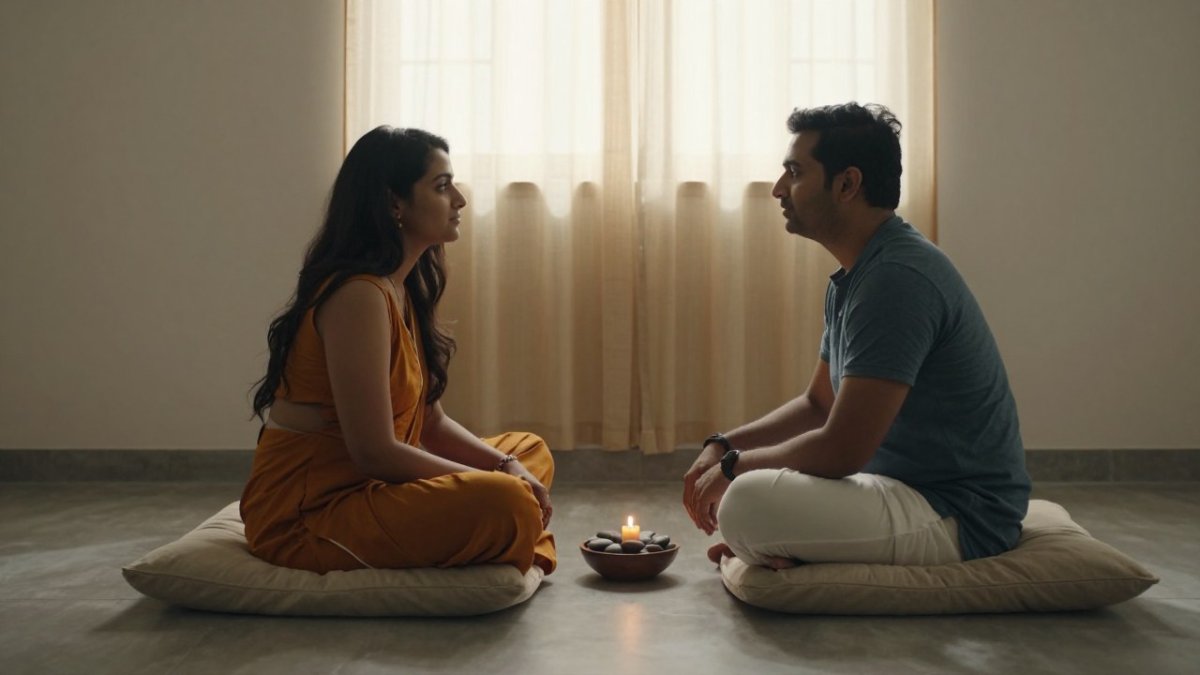
With a partner, try a simple mirroring exercise:
- Sit facing each other, knees touching, eyes open
- One person breathes slowly while the other watches and matches the rhythm
- Switch roles after two minutes
- Talk briefly about what each of you noticed in your body
Solo practices include self-massage on the hands, arms, or chest, and slow movement that lets the body shake or sway gently.
Always keep consent at the center. Check in verbally, go at a pace that feels right for everyone, and stop when someone says so.
Step 5: A Confidence Sequence Before, During and After a Date
A simple sequence can connect these practices to real dating situations. Use it as a guide, not a rigid script.
Before the date:
- Do three minutes of mindful breathing
- Name one thing you are looking forward to
During the date:
- Check in with your body every 15 to 20 minutes
- Notice whether you are leaning in or pulling back
- Take a slow breath when you feel rushed
After the date:
- Spend five minutes noticing how your body feels
- Ask yourself what felt good and what felt uncomfortable
- Write down one thing you learned about your own needs
Many people find the "after" step the most useful. It turns each date into information rather than a verdict on their worth.
Measuring Progress, Limits and When to Book a Call With a Professional
Progress with somatic practices often looks quiet.
Be honest about the limits. Somatic practices are self-help tools, not therapy.
American Psychological Association's guide to finding a therapist can help you understand what kinds of professionals to look for.
The BodyVox offers private 1:1 immersions for individuals and couples, along with somatic sensuality retreats for gay, bisexual, trans, and queer men. Book a discovery call to talk through what fits your situation.
If you are ready to take the next step, The BodyVox can help you explore somatic intimacy coaching in a safe, client-led setting.
Frequently Asked Questions
What are five examples of somatic exercises?
Common somatic exercises include mindful breathing, body scans that move attention slowly from the feet to the head, progressive muscle relaxation that tenses and releases each muscle group, gentle shaking or expressive movement to discharge tension, and grounding through pressing the feet into the floor and noticing contact points. Each takes about five to fifteen minutes and can be done before a date, after a difficult conversation, or as a daily habit. Start with one that feels accessible and notice what changes in your body afterward. These are general self-help practices, not a substitute for individual clinical care.
Can somatic practices help with dating anxiety?
Somatic exercises for dating anxiety work by giving the nervous system direct signals of safety, such as slower exhalation, relaxed jaw and shoulders, and steady contact with the ground. Many people find that a brief breathing or grounding practice before a date reduces racing heart rate and the urge to over-explain themselves. Results vary, and persistent or intense anxiety deserves support from a licensed mental health professional. Somatic practices complement that care rather than replace it.
How can I calm my body before a date?
Try a three-part routine: take five minutes of slow breathing with a longer exhale than inhale, do a quick body scan to notice where you hold tension, and press your feet firmly into the floor for thirty seconds to feel grounded. Keep the practice short enough to do at home or in a restroom before meeting someone. Notice whether your body feels softer and more present afterward, and adjust the routine to what works for you.
When should I seek support from a somatic therapist or intimacy coach?
Consider professional support if dating or intimacy brings up strong fear, numbness, dissociation, or memories of trauma, or if self-guided practices do not ease your distress over several weeks. A licensed therapist or a certified somatic sex and intimacy coach can offer structure, consent-focused guidance, and safety. Check credentials and ask how the provider handles boundaries and consent before you begin. This article offers general information and is not individual medical or therapeutic advice.