 How-to
7 Somatic Intimacy Steps for Nervous System Calm
Quick Summary
Somatic intimacy techniques are body-based practices that help you feel safe, present, and connected during closeness. They start with noticing nervous system activation, then build grounding and breathwork skills before adding partnered touch with clear consent and opt-out cues.
- Check in once a day for one week, noticing tension, breathing, and whether you feel present.
- Practice a 5-minute grounding routine daily for two weeks before involving a partner.
- Use a slow breath pattern: inhale for four counts, exhale for six, for two to three minutes.
- Begin partnered work with co-regulation for about 10 minutes, with no physical touch needed.
- Use the check-in loop before, during, and after touch, and stop immediately when a partner signals pause.
Table of Contents
- What Somatic Intimacy Techniques Are and Why the Nervous System Matters
- Step 1: Recognize Your Stress and Nervous System Activation
- Step 2: Practice Somatic Grounding Techniques Solo
- Step 3: Use Breathwork for Intimacy to Settle Your Body
- Step 4: Try Co-Regulation Exercises for Couples Without Forcing Touch
- Step 5: Progress to Somatic Intimacy Exercises for Couples, with Consent and Opt-Out Cues
- When to Adapt, Stop, or Seek Trauma-Informed Support
- Booking Your Next Step With The BodyVox
- Frequently Asked Questions
What Somatic Intimacy Techniques Are and Why the Nervous System Matters
Last Updated: October 30, 2026
Somatic intimacy techniques are body-based practices that help you feel safe, present, and connected during closeness.
Nervous system regulation is the body's ability to move between activation (fight, flight, or freeze) and calm (rest, connection, and recovery).
Many adults carry old stress patterns into intimacy: holding your breath, going quiet, or feeling nothing at all.
Here is what that looks like in practice:
- Tight shoulders or a clenched jaw during touch
- Racing thoughts that pull you out of your body
- Numbness or a sense of "checking out"
The steps below start solo, build breath and grounding skills, then move toward connection with a partner.
Step 1: Recognize Your Stress and Nervous System Activation
Before you can settle your body, you need to notice when it is activated. Most people miss the early signs because they have become normal.
Try this check-in once a day for one week. Pause and ask: *Where do I feel tension right now? How is my breathing?
Common signs of activation include:
- Shallow or fast breathing in the upper chest
- Muscle tightness in the jaw, neck, shoulders, or belly
- Restlessness or an urge to move, leave, or fix something
Watch out: Do not try to force calm when you feel overwhelmed. Forcing often adds more tension.
Step 2: Practice Somatic Grounding Techniques Solo
Grounding helps you return to the present moment and feel supported by your body and surroundings. Practice these skills alone before involving a partner.

Try this 5-minute grounding practice:
- Sit or stand with your feet flat on the floor and feel the contact with the ground.
- Name three things you can see in the room, slowly and without rushing.
- Notice one sound, then one physical sensation, such as the weight of your clothes.
- Press your feet gently into the floor and notice the support coming back up through your legs.
- Rest here for a few breaths before you move on.
Practice daily for two weeks. Some people find grounding easier to practice in the same place each time.
Watch for the difference between grounded and numb. Grounded feels present and steady; numb feels distant. If you notice numbness, shorten the practice and return to something you can feel, like your hands on your thighs.
Step 3: Use Breathwork for Intimacy to Settle Your Body
Breath is one of the fastest ways to shift your nervous system. Breathwork for intimacy focuses on slow, relaxed breathing that helps you stay connected during touch or closeness.
Try this simple breath pattern:
- Place one hand on your belly and one on your chest.
- Breathe in slowly through your nose for a count of four.
- Let the breath out through your mouth for a count of six.
- Repeat for two to three minutes.
When ready, bring this into closeness.
Common mistake: People often hold their breath during intimacy without realizing it. If you notice this, pause and take one slow exhale.
Breath should feel easy. If breathing exercises make you dizzy or anxious, stop and return to normal breathing.
Step 4: Try Co-Regulation Exercises for Couples Without Forcing Touch
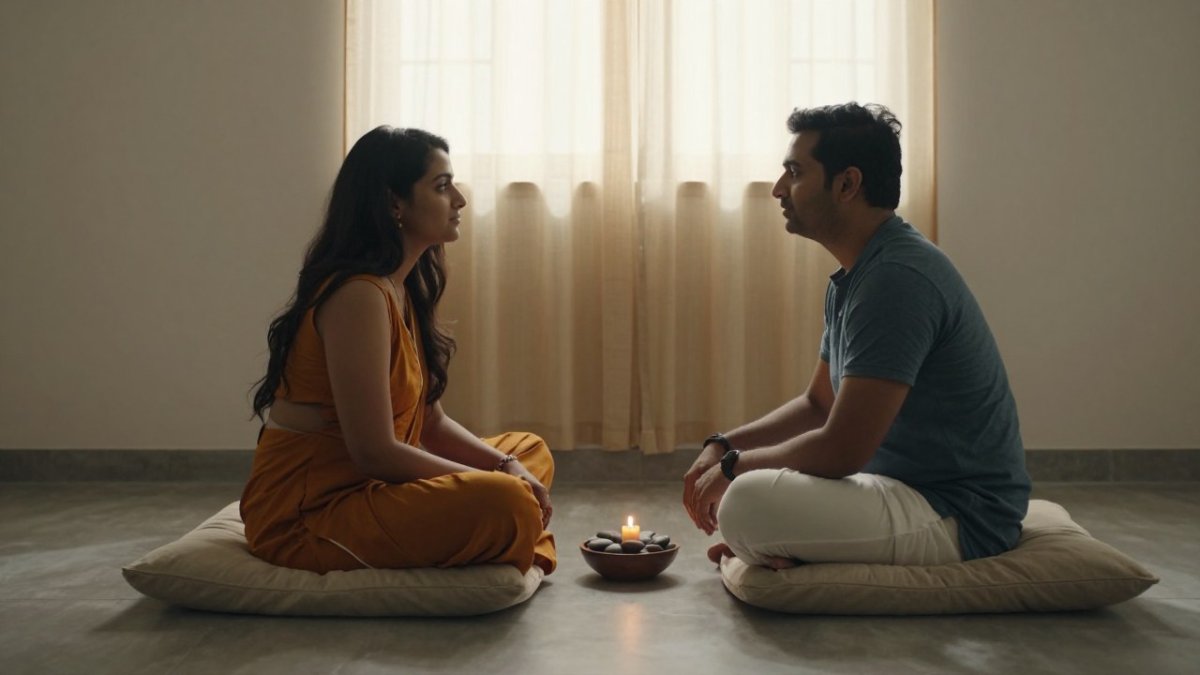
Co-regulation means two people help each other settle through presence, eye contact, and calm voices. No physical touch is needed, which makes this step useful if touch feels like too much right now.
Try this seated exercise with a partner:
- Sit facing each other with a comfortable distance between you.
- Each person takes three slow breaths while the other watches gently.
- Take turns describing one thing you feel in your body, using simple words like "warm," "heavy," or "tight."
- The listener responds with only "thank you" or a nod. No advice or fixing.
- Switch roles and repeat.
Being truly seen and heard can feel calming for some couples.
Keep it short, around 10 minutes. End by asking each other, "How do you feel now?" and accept whatever answer comes.
Step 5: Progress to Somatic Intimacy Exercises for Couples, with Consent and Opt-Out Cues
Most guides mention consent once and move on.
Set up the practice first:
- Agree on which body areas are open to touch and which are off-limits. Write the list down if that helps.
- Choose a simple stop word or gesture that either person can use at any time. A common choice is a two-tap signal on the partner's arm, plus the word "pause."
- Agree that stopping never requires an explanation. "I need to stop" is a complete sentence.
The check-in loop (use before, during, and after):
- Ask before: "Is it okay if I rest my hand on your forearm?" Wait for a clear yes. A shrug, a "maybe," or silence is not a yes.
- Name what you are doing: "I'm going to keep my hand still for about a minute." Predictability signals safety.
- Check during: Every 30 to 60 seconds, ask a simple question: "More, less, or same?" or "Stay here or move on?" Keep your voice calm and low.
- Offer the opt-out every time: "You can say pause or tap my arm anytime, and we'll stop." Say it out loud, even if you said it last time.
- Debrief after: Each person shares one word about how the touch felt, then one sentence about what they want next time.
Try a slow touch exercise:
- One partner rests a hand lightly on the other's forearm or upper back.
- The receiving partner breathes slowly and notices sensations without needing to respond.
- After one minute, pause and run the check-in loop.
- Switch roles or stop, based on what both people want.
- Each person shares one word about how the touch felt.
Opt-out cues to watch for:
- Pulling away or tensing up
- Shallow breathing or going quiet
- Saying "maybe" or "later" without enthusiasm
If you see any of these, pause and check in. Asking "Would you like me to stop?" is enough.
The pause protocol:
- Stop the touch immediately and move your hand away.
- Say "Thank you for telling me" or "I'm glad you paused."
- Ask one question: "Do you want to stop for now, or change something?"
- If the answer is stop, end the exercise and move to grounding (Step 2).
- If the answer is change, ask what would feel better: less pressure, a different body area, or no touch at all.
Renegotiating mid-exercise: Consent is not a one-time contract. It can change from minute to minute. Use language that makes changing easy:
- "I'd like to stay here a little longer. Is that good for you?"
- "I'm noticing I want less. Can we lighten the pressure?"
- "I want to stop this one and just sit together. Is that okay?"
If either person hesitates, default to stopping. You can always try again another day.
Progression matters: start solo, move to co-regulation, then add gentle touch, and only later consider more intimate exploration. Each stage builds on the last, and no stage needs to be rushed.
The check-in loop and pause protocol work best when each step is clear, so here is a quick reference for the process.
| Step | What to do | When |
|---|---|---|
| Ask before | Ask for a clear yes before touching | Before each touch |
| Name what you are doing | Say what you will do and for how long | Before each touch |
| Check during | Ask "More, less, or same?" | Every 30 to 60 seconds |
| Offer the opt-out | Remind your partner they can say pause or tap your arm | Every time |
| Debrief after | Share one word about the touch and one sentence about next time | After each session |
When to Adapt, Stop, or Seek Trauma-Informed Support
Somatic practices are not right for every moment. Some experiences call for a slower pace, a different approach, or professional help.
Adapt the practice if:
- Certain sensations trigger memories or strong emotions. Try a shorter duration (30 seconds instead of one minute) or a less intimate body area, such as the forearm instead of the back.
- You feel dizzy, faint, or unusually anxious during breathwork. Stop the breath count and return to normal breathing. Try grounding with your feet on the floor instead.
- Touch brings up feelings of shame, fear, or dissociation. Switch to no-touch co-regulation (Step 4) and keep sessions to 5 to 10 minutes.
Low-mobility and sensory-sensitive adaptations:
- Seated versions of every exercise, with feet flat on the floor.
- No-touch alternatives: eye contact, shared breathing, or describing sensations out loud.
- Dim lights, quiet room, or a weighted blanket if sensory input feels like too much.
Stop the practice right away if:
- You feel unsafe in any way.
- Your partner ignores a stop cue.
- You feel pressure to continue when you do not want to.
How to return to grounding if you get flooded:
- Stop the exercise and move to a seated position.
- Press your feet into the floor and name three things you can see.
- Breathe normally, not deeply, until the racing feeling settles.
- Drink water and wait at least 10 minutes before deciding whether to continue.
- Check in with your partner about what happened and what you need next.
Seek trauma-informed support if:
- Past experiences of abuse or assault keep affecting intimacy.
- You notice persistent numbness, flashbacks, or panic during closeness.
- Solo or partnered practice leaves you more distressed over time.
Trauma-informed support means working with someone who understands how past experiences live in the body. A licensed mental health professional can help you decide what is appropriate for your situation. Look for providers licensed in your state, such as through your state's licensing board.
Booking Your Next Step With The BodyVox
If you have worked through these steps and want more structure, The BodyVox offers trauma-informed, client-led somatic intimacy coaching to help you reconnect with your body, explore boundaries, and build embodied connection at your own pace.
Options include private 1:1 immersions and retreats. For current details, visit our website.
Ready to take the next step? Book A Call to talk through what would fit your needs.
Frequently Asked Questions
What are somatic intimacy techniques?
Somatic intimacy techniques are body-based practices that use breath, grounding, gentle movement and attentive touch to help you notice physical sensations and settle your nervous system before or during intimacy. Rather than analyzing feelings, you work with what the body is doing right now: where tension sits, how the breath moves, whether the chest feels open or tight. Practices are slow, consent-led and paced to your own signals. They are general educational information, not therapy, and a qualified somatic practitioner can help you tailor them to your history.
How can couples practice co-regulation without forcing touch?
Co-regulation exercises for couples can start with no touch at all. Sit facing each other at a comfortable distance, breathe at your own pace, and take turns naming one physical sensation you notice. Partners can match each other's slower exhale without speaking. Agree in advance that either person can pause, move away or change the exercise at any moment. Touch can be added later only when both people explicitly say yes, and the opt-out cue should be as easy to use as the invitation.
When should you stop an intimacy exercise and seek support?
Stop the exercise if you feel dissociated, numb, dizzy, panicky, flooded with memories, or unable to return to the present moment after several minutes. Other signs include sharp pain, a sense of freezing, or wanting to leave but feeling unable to say so. Pause, reorient to the room, and use your agreed opt-out cue. If these reactions repeat or feel overwhelming, consult a qualified mental health professional or trauma-informed somatic practitioner before continuing.