 how-to
Overcoming Intimacy Shame for Men Over 40
Table of Contents
- How Intimacy Shame Takes Hold After 40
- The Physiological-Psychological Feedback Loop: Testosterone, Aging, and Desire
- Overcoming Sexual Performance Pressure Without Adding More Pressure
- Somatic Sex Therapy for Men: Why Body-Based Work Heals Shame
- Couples Coaching for Emotional Connection: Moving Beyond Performative Intimacy
- Communication Strategies That Break the Silence
- Frequently Asked Questions
Last Updated: September 13, 2026
How Intimacy Shame Takes Hold After 40
Intimacy shame is the internalized belief that your desires, your body, or your performance are fundamentally flawed or unacceptable. For men over 40, this shame often intensifies as physical changes intersect with decades of cultural conditioning about what masculinity should look like. At The BodyVox, we see this play out constantly: men who spent their 20s and 30s performing confidence, only to find that the same strategies stop working when their bodies begin to change.
The shame doesn't arrive overnight. It accumulates through small moments of withdrawal, each one reinforcing the belief that something is wrong with you.
The Shame Cycle: Withdrawal, Panic Spirals, and Avoidance
The shame cycle follows a predictable pattern. A man experiences a moment of difficulty, perhaps erectile dysfunction or reduced libido. Instead of curiosity, he feels failure. That failure triggers panic spirals: racing thoughts about inadequacy, aging, and losing attractiveness. The nervous system interprets this as threat, flooding the body with cortisol and adrenaline.
The result is withdrawal. He avoids intimacy entirely to escape the possibility of failure. This avoidance provides temporary relief but deepens the shame, because now he's also ashamed of avoiding his partner.
A common mistake is treating this as a purely psychological problem to think your way out of. The body has already learned that intimacy equals danger. Until that learned response changes, willpower alone won't break the cycle.
The Physiological-Psychological Feedback Loop: Testosterone, Aging, and Desire
What most guides miss is how biology and psychology reinforce each other. Testosterone levels naturally decline with age, affecting libido, energy, and erectile function. These physical changes are normal. The problem is the meaning men assign to them.
When a man notices reduced desire, he often interprets it as a verdict on his masculinity rather than a biological shift. That interpretation triggers anxiety. Anxiety impairs arousal. Impaired arousal confirms the original fear. The loop tightens.
What Actually Changes After 40
Testosterone production in men peaks in the late teens and early 20s, then declines gradually, most research points to roughly 1% per year after age 30, with a steeper drop for some men after 40. That is a slow slope, not a cliff. The clinical threshold for low testosterone is generally cited as under 300 ng/dL on two morning blood draws, and the Endocrine Society recommends testing before 10 a.m. because levels fluctuate throughout the day. A man can sit at 350 ng/dL, feel fine, and never think about it. A man at 280 ng/dL may notice fatigue, low motivation, and reduced spontaneous desire, and then build an entire story about himself on top of a lab value he has never checked.
Other changes stack on top of the hormonal shift:
- Slower arousal curve. The time from interest to full erection lengthens. This is vascular and neurological, not a character flaw.
- Reduced spontaneous desire. Men over 40 often shift from spontaneous desire (randomly horny) to responsive desire (arousal that follows stimulation and context). This is a well-documented pattern in sex research and it is not a sign that something is broken.
- Longer refractory period. The recovery window between erections stretches from minutes in your 20s to hours or longer. Expecting the old timeline creates a fresh source of shame.
- Medication side effects. Common prescriptions for blood pressure, depression, and hair loss can suppress libido or erectile function. This is worth raising with a physician before assuming the problem is psychological.
How Anxiety Physically Blocks Arousal
The mechanism matters because it explains why willpower fails. Sexual arousal depends on parasympathetic nervous system activity, the "rest and digest" branch. Anxiety flips the body into sympathetic dominance, "fight or flight." In that state, blood vessels constrict, heart rate climbs, and the smooth muscle tissue in the penis that needs to relax to allow blood flow instead stays tense. The physiological result is exactly what the man fears: no erection, or a partial one that fades.
So the sequence runs like this:
- A man notices reduced desire or a softer erection.
- He interprets it as a failure of masculinity.
- That interpretation triggers anxiety and self-monitoring.
- Self-monitoring during sex pulls attention away from sensation and into the head.
- Sympathetic activation blocks the parasympathetic response arousal requires.
- The erection fails, confirming the belief in step 2.
This is why a man can have a full erection during masturbation alone and lose it the moment a partner is present. The biology is not broken. The context has changed what the nervous system is doing.
Where the Loop Breaks
The loop does not break at the level of insight. Knowing the mechanism is useful, but the body has already learned that intimacy equals threat. The break happens when the nervous system is repeatedly given evidence that intimacy is safe, through slow, low-stakes physical contact, breath work that shifts the body out of sympathetic dominance, and removing the performance frame from sex entirely.
It also helps to rule out the medical layer first. A primary care visit with a testosterone panel, a review of current medications, and a basic cardiovascular check removes the guesswork. If a physician finds low testosterone, treatment options exist. If everything is normal, the work shifts to the nervous system, and that is where body-based practice does what talk therapy alone cannot.
Overcoming Sexual Performance Pressure Without Adding More Pressure
Overcoming sexual performance pressure starts with removing the performance frame entirely. Most advice about this topic inadvertently adds pressure: "try these techniques," "communicate better," "focus on your partner." Each suggestion becomes another standard to meet.
A more effective approach is shifting from outcome to sensation. Instead of aiming for erection, orgasm, or pleasing your partner, practice noticing what you actually feel. This sounds simple. It's remarkably difficult for men who've spent decades treating sex as a task to complete.
Micro-Habits for Intimacy That Retrain Your Nervous System
Micro-habits are small, repeatable practices that build new neural pathways over time. They work because they're sustainable and low-stakes. Here are practices we teach at The BodyVox:
- Two-minute body scan before bed: Notice sensations in your body without trying to change them. This builds interoceptive awareness.
- Hand on chest during stressful moments: Physical touch activates the parasympathetic nervous system.
- Slow breathing before any intimate encounter: Four counts in, six counts out. This signals safety to your nervous system.
- Daily self-touch without goal: Touch your own body with curiosity, not arousal. This rebuilds connection to physical sensation.
These aren't techniques for better sex. They're practices for rebuilding the relationship between your nervous system and your body.
Somatic Sex Therapy for Men: Why Body-Based Work Heals Shame
Somatic sex therapy for men addresses shame where it actually lives: in the body's learned responses. Talk therapy can help you understand why you feel shame. Somatic work helps your nervous system learn a different response.
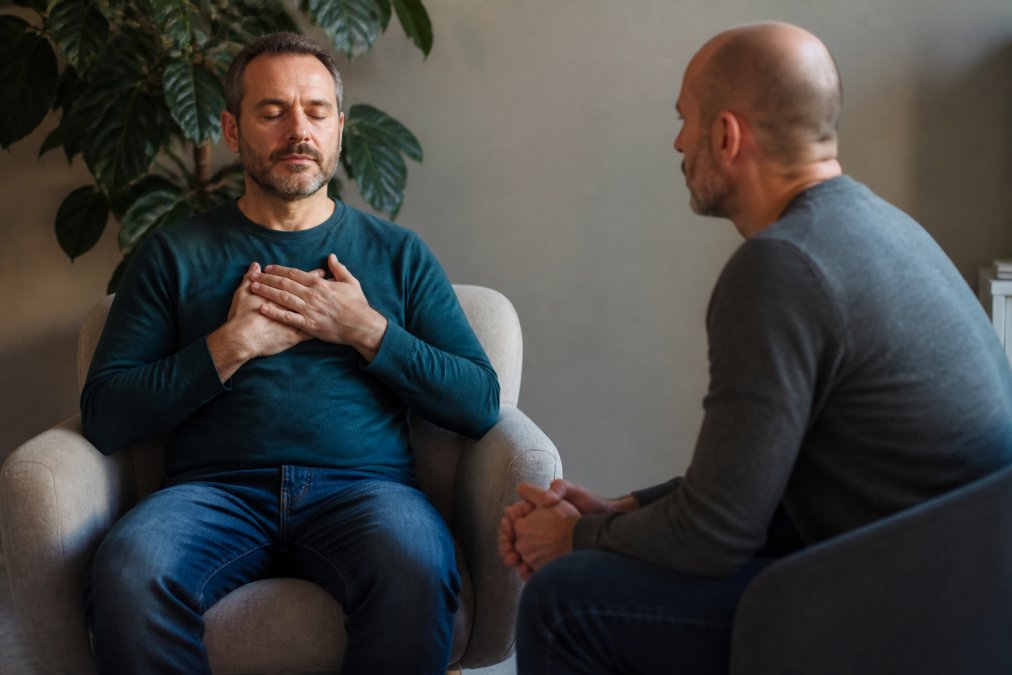
The approach is client-led and trauma-informed, meaning you set the pace and boundaries. Sessions might involve breathwork, gentle movement, or guided awareness exercises. The goal isn't to push through discomfort but to expand your window of tolerance for intimacy-related sensations.
For men dealing with relational trauma or years of internalized beliefs about sexuality, this body-based approach often reaches places that conversation alone cannot. For those who want to go deeper, Private 1:1 Immersions for Individuals and Couples offer an extended container for this work, and Somatic Sensual Retreats for GBTQ Men bring it into a group setting where shared experience can loosen shame's grip.
Couples Coaching for Emotional Connection: Moving Beyond Performative Intimacy
Couples coaching for emotional connection helps partners move past the scripts they've been performing. Many long-term couples develop intimacy patterns that look functional but lack genuine presence. Sex becomes routine. Touch becomes transactional.
The work involves rebuilding communication and physical connection simultaneously. Partners learn to express desires and boundaries without triggering defensiveness. They practice touch that isn't foreplay, building trust that physical contact doesn't always lead somewhere.
This matters especially for men who've equated intimacy with performance. When sex is the only context for physical closeness, every touch carries pressure. Expanding the repertoire of physical connection reduces that pressure.
Communication Strategies That Break the Silence
Communication barriers around intimacy often stem from fear of vulnerability. Admitting difficulty feels like admitting failure. So men stay silent, and silence becomes its own form of shame.
Breaking the silence requires specific language that doesn't trigger defensiveness. Instead of "I have a problem," try "I've noticed some changes and I want to talk about them." Instead of "I can't perform," try "My body responds differently now, and I want to understand it together."
| Challenge | Communication Approach | Why It Works |
|---|---|---|
| Difficulty with erections | "I want to explore what feels good without pressure" | Shifts focus from performance to sensation |
| Low desire | "My body needs different things to feel aroused now" | Normalizes change without blame |
| Avoiding intimacy | "I've been pulling away because I feel anxious" | Names the pattern without making partner responsible |
| Fear of judgment | "I need to feel safe to be vulnerable with you" | Invites partnership rather than confession |
The goal isn't perfect communication. It's creating enough safety that honesty becomes possible.
Intimacy shame thrives in isolation and silence. Breaking free requires more than understanding; it requires embodied practice, professional support, and often, a safe container to explore what's been avoided for years. The BodyVox offers somatic sex and intimacy coaching, private 1:1 immersions, and couples coaching designed specifically for men navigating these challenges. Through trauma-informed, client-led sessions, we help you reclaim body awareness, navigate intimacy beyond performance, and build the somatic skills for genuine connection. Book a call to explore whether this work is right for you.
Frequently Asked Questions
Why does sexual shame often intensify for men in their 40s?
Men over 40 face a convergence of physical changes, cultural expectations, and accumulated internalized beliefs. Testosterone levels gradually decline, which can affect libido and erectile function, while cultural conditioning ties male worth to performance. When the body no longer responds the same way, shame fills the gap. The shame cycle then triggers withdrawal and intimacy avoidance, making the problem worse. Understanding this feedback loop is the first step toward self-compassion and change.
How does somatic coaching help men process intimacy-related shame?
Somatic coaching works with the body's nervous system rather than just talking about problems. For men dealing with intimacy shame, the body often holds tension, numbness, or panic spirals that talk therapy alone may not reach. A trauma-informed somatic approach helps you notice physical sensations, regulate your nervous system, and gradually rebuild safety in your body. This body-based learning can shift internalized beliefs at a deeper level, allowing emotional connection and sexual confidence to emerge naturally.
What are the signs that shame is impacting a man's ability to connect?
Common signs include avoiding intimacy altogether, feeling numb or detached during sex, experiencing performance anxiety, making excuses to skip dates, and withdrawing emotionally after physical encounters. You might also notice panic spirals before or during intimacy, negative body image, or a persistent sense that you are not enough. These are signs of the shame cycle at work. Recognizing them without judgment is the first step toward breaking the pattern.
How can men over 40 communicate their intimacy struggles to a partner?
Start by choosing a calm moment outside the bedroom. Use 'I' statements to describe what you feel, such as 'I notice I get anxious about performance and it makes me pull away.' Avoid blaming yourself or your partner. Ask for what you need, whether that is patience, non-sexual touch, or a pause. This kind of vulnerable communication reduces communication barriers and builds emotional connection. Couples coaching can provide a structured space to practice these conversations.